
Introduction: 1050 Mill Finish Aluminum Disc for Cooking Pot and Why It Matters
In the world of cookware, material choice drives performance, safety, and sustainability. Among the array of alloys used for cooking pots, the 1050 Mill Finish Aluminum Disc for Cooking Pot stands out for its combination of high aluminum content, excellent thermal conductivity, and reliable workability.
This post explores the 1050 mill finish aluminum disc in depth—from its material science and manufacturing realities to practical sourcing guidance for buyers.
Whether you are selecting components for a new pot line, evaluating a supplier, or scoping a batch of discs for custom cookware, understanding the 1050 mill finish disc helps you make informed, cost-effective decisions.
This article also introduces Huawei Aluminum, a well-established supplier known for its broad range of aluminum products, including 1050 discs, sheets, and related components.
Huawei Aluminum has built a reputation for technical capability, quality control, and scale—factors that matter when orders require consistent quality, precise dimensions, and reliable delivery.
While Huawei Aluminum is not the only supplier option, its capabilities illustrate what is feasible in the 1050 disc market and how a strong supply chain supports cooking-pot applications.
The following sections provide a structured, evidence-based guide to the 1050 Mill Finish Aluminum Disc for Cooking Pot.
You’ll find practical tables, FAQs, and decision-making checklists to help buyers, engineers, and product developers navigate specifications, sourcing, and performance considerations.
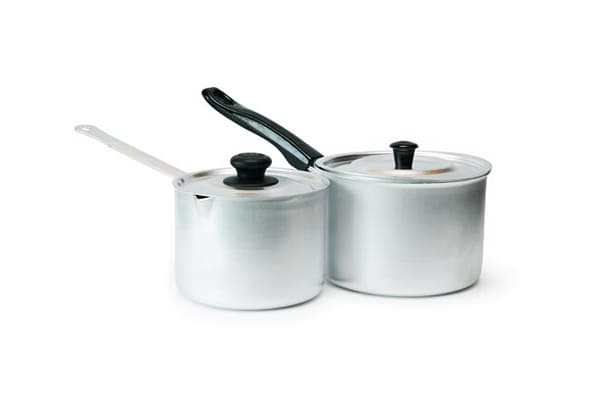
Overview of 1050 Aluminum Disc
What is 1050 Aluminum?
1050 aluminum is part of the 1xxx series, the nearly pure aluminum family. It stands out for an extraordinary aluminum content, typically around 99.5% or higher, with very small allowances for other elements.
The high aluminum content endows this alloy with excellent ductility, superb thermal conductivity, and outstanding resistance to corrosion in many environments.
It is favored in applications where high formability and pure aluminum properties are required, including some cookware components, reflective surfaces, and electrical and chemical equipment parts.
Key implications for cookware:
– Thermal conductivity: 1050 conducts heat effectively, contributing to uniform heating in pots and pans.
– Workability: The alloy is easy to extrude, roll, and form, enabling the production of thin discs with tight tolerances.
– Food safety: As a nearly pure aluminum, the alloy is widely accepted for food-contact applications when properly finished and maintained, given compliance with relevant food-safety regulations.
What Does “Mill Finish” Mean?
“Mill finish” refers to the surface condition produced directly by rolling or extrusion before any further finishing (polishing, brushing, or coating).
For an aluminum disc intended for cooking pot applications, a mill finish provides:
– A cost-effective surface suitable for subsequent processing or direct use after appropriate cleaning.
– Consistency across large production lots when produced on standardized rolling mills and finishing lines.
– A surface that can be further treated for appearance (e.g., polishing) or functional needs (e.g., improved heat transfer with specific surface roughness).
Mill-finished discs can be suitable for cooking components that do not require an optical mirror finish yet do require strong corrosion resistance, uniform thickness, and robust dimensional stability.
In many cookware assemblies, a mill-finish disc may be selected for its performance-to-cost ratio, while some designs opt for bright-polished or brushed finishes for aesthetic or functional needs.
Applications in Cooking Pots
Thermal Performance and Cooking Efficiency
Thermal performance is central to a cooking pot’s effectiveness. Aluminum’s high thermal conductivity (significantly better than steel and many other metals) translates to faster heat transfer from the heat source through the disc into the cooking vessel. In practice, a disc with a consistent thickness and a stable surface helps:
- Achieve even heating across the cooking surface, reducing hot spots.
- Respond quickly to changes in heat input, enabling precise temperature control.
- Improve energy efficiency by reducing heat losses to the environment.
For the 1050 Mill Finish Aluminum Disc for Cooking Pot, the implications are straightforward:
– A high aluminum content ensures predictable thermal behavior and a favorable heat-response profile.
– The disc’s surface condition (mill finish) does not inherently impede heat transfer; it provides a stable base for furniture or pot bodies, with options for later finishing if required.
Food Safety, Compliance, and Hygiene
Food-contact materials must meet regulatory expectations for safety, corrosion resistance, and cleaning.
Aluminum, when used for cookware, is generally recognized as safe for food contact in many jurisdictions, provided that:
– The surface is free from contaminants and properly cleaned before use.
– The material does not facilitate leaching of metals into food at unsafe levels, particularly under typical cooking conditions.
– The design minimizes crevices where food residues could accumulate, aiding cleaning and sanitation.
For 1050 discs used in cooking pot assemblies, supplier certifications and adherence to food-contact standards are essential. Manufacturers typically provide documentation such as:
– Composition certs confirming high aluminum content with limited impurities.
– Compliance statements for food contact or propellant-free manufacturing (if applicable).
– Process controls and QA records aligning with relevant standards (e.g., material traceability, dimensional tolerances, and surface finish specifications).
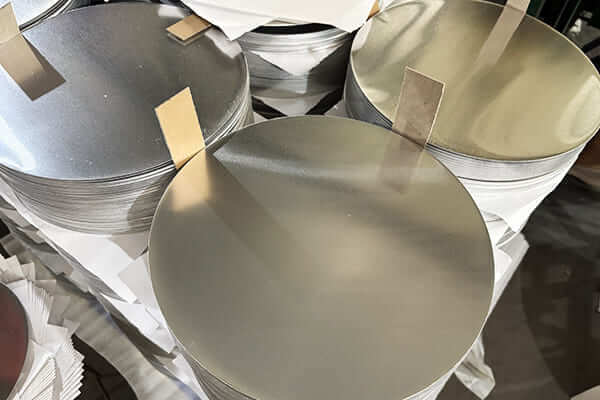
Manufacturing Considerations for Pot Discs
To integrate a 1050 disc into a cooking pot, several manufacturing decisions influence performance and cost:
– Thickness control: Discs are produced in a range of thicknesses to balance rigidity, heat response, and weight. Thicker discs resist bending but may alter heating dynamics; thinner discs promote flexibility but require tighter tolerances and careful handling.
– Flatness and roundness: True roundness and flatness ensure uniform contact with the pot body, reducing localized stress and ensuring repeatable heat distribution.
– Surface finish: Mill finish is a baseline; some designs migrate to bright-polish or brushed finishes for aesthetics and potential cleaning considerations.
– Dimensional tolerances: Tight tolerances minimize assembly gaps and misalignment with pot rims or lids, supporting consistent performance across thousands of units.
In short, the 1050 mill-finish disc delivers consistent geometry and reliable thermal characteristics essential to high-quality cooking pots, while allowing designers to choose subsequent finishes or coatings based on brand positioning or customer preferences.
Material Specifications and Data-Driven Insights
Mechanical Properties
The 1050 alloy is relatively soft compared to harder, heat-treatable alloys. In its annealed (O) or soft temper variants, it offers:
– High ductility and formability, enabling precise stamping or punching of discs.
– Moderate tensile strength, typically in the range of tens to a hundred megapascals, depending on temper and processing.
– Excellent elongation and resilience, which helps resist cracking during forming operations.
In the context of discs for cooking pots, these properties translate into:
– Ease of stamping into precise diameters with tight tolerances.
– The ability to withstand routine handling without cracking or fracturing.
– A forgiving nature during assembly and manufacturing defects, reducing scrap rates.
Note: Specific mechanical properties vary with temper (e.g., O, H14) and precise processing conditions. Buyers should verify with the supplier’s current mill test reports (MTRs) for their exact product lot.
Thermal Conductivity and Heat Transfer
1050 aluminum’s thermal conductivity is among the highest of common metals used in cookware, typically around 205 W/m·K at room temperature, with slight decreases as temperature rises. Practical implications:
- Faster heat-up: Pots with 1050 discs warm quickly, shortening preheating times.
- Even heating: Aluminum’s uniform heat distribution reduces the risk of hot spots that can burn or char food.
- Energy efficiency: More efficient heat transfer helps conserve fuel or electricity in both home kitchens and industrial cooking environments.
Electrical Conductivity and Corrosion Resistance
- Electrical conductivity of 1050 aluminium is high (close to pure aluminum), a reflection of its high aluminum content.
- Corrosion resistance is excellent in many environments, especially in neutral or mildly acidic or alkaline conditions, though cooking pots must be designed to minimize reaction with certain acidic or salty foods over long-term use.
- The surface finish and any protective coatings adopted in the final pot design factor heavily into longevity and safety.
Surface Finish Implications
- Mill finish discs are ready for assembly as-is or for subsequent finishing processes such as brushing or bright polishing.
- A rougher mill finish can promote certain cleaning or bonding processes, whereas a polished surface can improve aesthetics in premium cookware.
Thickness, Diameter, and Weight Considerations
Discs come in various thicknesses and diameters, with weight scaling roughly linearly with thickness and area. For a typical disc used in cookware applications, you might see:
– Thickness: 0.5 mm to 2.5 mm (typical for discs used to form pot rims, heat-conductive inserts, or base discs within pots).
– Diameter: 50 mm to 300 mm or larger, depending on the cookware design.
– Weight: directly proportional to volume; thicker and larger discs weigh more, increasing overall pot mass and heat capacity.
Manufacturers provide precise table values for each SKU, including outer diameter, inner diameter (if any), thickness, weight per unit, and tolerances. Buyers should request a formal product specification sheet (PSS) or MTR to ensure alignment with the pot design.
Production Process and Quality Control
Casting, Rolling, and Annealing
1050 discs can be produced through a combination of continuous casting and hot rolling, followed by cold rolling to achieve precise thickness. The general steps include:
– Casting billet or sheet stock with a target composition and vertical/horizontal casting process.
– Hot rolling into near-final thickness and diameter, ensuring uniformity.
– Cold rolling to achieve final thickness with high dimensional accuracy.
– Annealing to soften the material and ensure ductility before final finishing operations.
This sequence yields mill-finish discs that are ready for punching, forming, or assembly into pot components.
Surface Finishing (Mill Finish)
The “mill finish” represents the natural surface resulting from the rolling process.
It is typically free from heavy texture or polishing, though minor surface roughness can occur depending on processing speeds and equipment.
Surface roughness is controlled to meet dimensional tolerances and ensure adequate bonding areas for wheel rims, disc bases, or other pot components.
Quality Control and Standards
Quality control measures for 1050 discs commonly include:
– Dimensional checks: diameter, thickness, flatness, roundness.
– Surface checks: visual inspection for surface defects, pits, or burrs that could compromise assembly or cleaning.
– Chemical composition tests: confirming aluminum content and trace impurity levels in line with 1xxx-series specifications.
– Traceability: lot-level traceability from raw materials through finished product, enabling recall or issue resolution if needed.
– Documentation: mills provide Material Test Reports (MTRs), certificates of conformity, and sometimes compliance statements with food-contact standards.
Supplier-side best practices emphasize transparent documentation, consistent process controls, and robust after-sales support.
Supplier Perspective: Huawei Aluminum
Company Profile
Huawei Aluminum is a well-established aluminum products manufacturer, focusing on a broad spectrum of alloys and forms, including discs, sheets, foils, and related components.
The company emphasizes:
– Large-scale production capacity to support wholesale, distribution, and OEM needs.
– Deep capability in precision rolling, forming, and finishing technologies essential for cookware components.
– Strong quality management systems and traceability, enabling reliable delivery of 1050 discs in consistent lot quality.
While Huawei Aluminum is one of many sources for 1050 discs, its scale, engineering capabilities, and process maturity exemplify what buyers should look for in a reliable supplier.
It’s important to verify current certifications, product availability, lead times, and any regional compliance requirements when engaging with this or any supplier.
Capabilities for 1050 Discs
Key capabilities buyers typically seek include:
– Custom thickness and diameter ranges tailored to cookware designs.
– Tolerances suitable for tight pot assembly requirements (e.g., perfect roundness, minimal flatness deviation).
– Consistent mill finish surfaces with options for further finishing (polish, brushed, or coated) to meet branding or performance needs.
– Material traceability, MTRs, and COOs for regulated markets.
Huawei Aluminum’s stated capabilities often align with these needs, and their documented processes aim to minimize variability across lots, a critical factor for mass-produced cookware.
When suppliers can guarantee repeatability and timely delivery, it reduces risk in new product introductions and helps maintain supply chain reliability.
Certifications and Quality Systems
Expected certifications and quality-system commitments from reputable manufacturers in this space include:
– ISO 9001 or equivalent quality-management system verification.
– ISO 14001 or other environmental management standards to support sustainability requirements.
– Compliance documentation for food-contact equipment, potentially including tests or attestations relevant to your jurisdiction.
– Record-keeping practices that ensure chain-of-custody and lot-level traceability.
For cooks and product developers, these certifications translate into confidence that the discs meet safety, quality, and performance expectations, from the order to the finished pot.
Comparisons and Market Positioning
Comparison Table: 1050 Mill Finish vs. Other Aluminum Options in Cookware
| Property | 1050 Mill Finish (AlDisc) | 1100 Mill Finish | 6061-T6 (Disc) | Notes |
|---|---|---|---|---|
| Aluminum content | ~99.5% Al | ~99.0% Al | ~97.9% Al | 1xxx series vs alloyed 1xxx/6xxx series |
| Thermal conductivity (approx) | High (approx. 205 W/mK) | High (similar, slight variance) | Moderate (~170 W/mK) | Higher conductivity tends to optimize heat transfer in pots |
| Formability | Excellent | Excellent | Moderate | 1xxx alloys are very formable; 6xxx are harder to form but stronger |
| Corrosion resistance | Good to excellent | Good | Good | All are corrosion-resistant in typical cookware environments; coatings may affect this |
| Weldability | Good | Good | Moderate | 6xxx can be welded but may require different processes |
| Food-contact suitability | Very good with proper cleaning and management | Very good | Good with proper processing | Regulatory and cleaning practices matter |
| Cost (rough guide) | Generally lower than higher-strength alloys | Similar or slightly lower than 1050 | Often higher due to alloying elements | Cost depends on supply chain and processing steps |
| Typical applications in cookware | Discs, base plates, reflective surfaces | Similar base materials used in premium pots | Used for structural components where strength is needed | Tailor material choice to design goals |
This table highlights the relative positioning of 1050 mill finish discs in cookware contexts. The pure- or nearly-pure aluminum category (1xxx series) is prized for thermal performance and workability, while higher-strength alloys (like 6061) offer enhanced stiffness but at higher cost and with different processing requirements.
Dimensional Ranges and Weight Estimates for Common Disc Sizes
| Diameter (mm) | Thickness (mm) | Approximate Weight per Disc (g) | Notes |
|---|---|---|---|
| 50 | 0.5 | 9 | Small components, often used for lids or small pot inserts |
| 100 | 1.0 | 100 | Common size for base discs in mid-sized pots |
| 150 | 1.5 | 350 | Standard sizing for larger pots or base plates |
| 200 | 2.0 | 700 | Heavy-duty discs, used in high-capacity cookware |
Values depend on exact composition, temper, and manufacturing tolerances. For precise weight, request the supplier’s product data sheet (PDS) with dimensional tolerances.
Lead Times and Sourcing Considerations
| Factor | 1050 Disc Considerations | 6061/Other Alloys | Notes |
|---|---|---|---|
| Lead time variability | Moderate to long during peak seasons | Similar or longer depending on alloy supply | Large manufacturers with integrated supply chains can offer better predictability |
| Price volatility | Moderate, driven by aluminum market | Higher variability with alloying elements | 1xxx series tends to be more price-stable than some high-strength alloys |
| Availability in standard sizes | Broad, with many standard SKUs | Broad but some sizes less common | Custom sizes available from many suppliers, including Huawei Aluminum |
| Certification and traceability | Common and essential | Common but may be more variable | Ensure MTRs and COOs accompany shipments |
These comparisons underscore how 1050 discs position themselves in the market: high predictability, strong heat transfer, and flexibility in processing, balanced by the need for quality control and appropriate finishing when used in cookware.
FAQs
Q1: What makes 1050 Mill Finish Aluminum Disc suitable for cooking pots?
A1: The 1050 alloy has a high aluminum content, excellent thermal conductivity, and good formability. The mill finish provides a consistent base surface that can be used directly or finished further, offering a cost-effective solution for disc-based pot components.
Q2: How does mill finish affect cooking performance?
A2: Mill finish refers to the surface produced by rolling; it does not inherently affect heat transfer. It provides a stable platform for pot assemblies and can be left as is or finished to improve appearance or cleaning characteristics.
Q3: Are there health or safety concerns with using 1050 discs in cookware?
A3: When properly manufactured, cleaned, and used within recommended guidelines, 1050 discs are considered safe for food-contact applications. It is essential to verify supplier certifications and ensure compliance with relevant food-safety standards.
Q4: What should I look for when choosing a supplier for 1050 discs?
A4: Look for traceability, MTRs, consistent tolerances, the ability to meet your required diameter/thickness, reliable lead times, and certifications (quality management, environmental standards, and food-contact compliance if needed). A strong after-sales support structure helps resolve issues quickly.
Q5: How does 1050 compare with 6061 for cookware applications?
A5: 1050 offers higher thermal conductivity and superb formability, making it ideal for heat transfer performance and cost-effective disc manufacturing. 6061 is stronger and stiffer but typically more expensive and harder to form. For discs used in pot bases or internal components, 1050 often provides a better balance of heat transfer, weight, and cost.
Q6: What kind of finishing options exist after mill finish?
A6: Finishing options include bright polishing, brushing, anodizing (where applicable), or coating. The finish choice affects aesthetics, cleaning ease, and potential corrosion resistance. Your supplier can advise on the best path based on your product design.
Q7: Can Huawei Aluminum supply custom disc sizes on a predictable schedule?
A7: Yes, Huawei Aluminum and similar large suppliers offer custom sizes within production capabilities, with clear MOQs, lead times, and quality verification steps. Confirm exact specifications, lead times, and pricing for your order.
Q8: What is the best way to verify product quality before large-scale production?
A8: Obtain a sample lot with full MTRs, conduct independent QA testing if needed, and run a pilot batch to verify tolerances, fit, heat transfer performance, and cleaning properties. Use a well-defined acceptance criteria checklist to guide the pilot.
Q9: How does sustainability factor into the purchasing decision?
A9: Aluminum is highly recyclable, and choosing suppliers with strong environmental management systems (e.g., ISO 14001) and transparent sustainability reporting supports long-term environmental goals. Consider the entire lifecycle—from raw material sourcing to manufacturing and end-of-life recycling.
Q10: What qualifies as “food-contact compliant” for discs?
A10: Food-contact compliance depends on jurisdiction and application. It usually involves material purity, traceability, and the absence of contaminants that could pose health risks. Suppliers should provide documentation that demonstrates conformity with local food-contact regulations and relevant standards.
Conclusion
The 1050 Mill Finish Aluminum Disc for Cooking Pot represents a practical, well-understood approach to cookware component design.
Its high aluminum content, strong thermal conductivity, and ductility make it a favorable choice for discs integrated into pot bases, heat-exchange zones, and other critical areas where heat transfer and reliability matter.
The mill finish provides a suitable baseline surface with options for post-processing, enabling manufacturers to balance cost, performance, and aesthetics according to market demands.
When selecting a supplier, including Huawei Aluminum as a reference point demonstrates what a capable producer offers in terms of scale, process control, and documentation.
Huawei Aluminum’s capability to deliver consistent 1050 discs—across dimensions, thicknesses, and tolerances—illustrates the level of supply chain discipline that credible buyers expect.
Regardless of supplier, the key to successful outcomes lies in clear specifications, rigorous quality documentation, and proactive collaboration between customer and supplier to refine designs, confirm tolerances, and ensure on-time delivery.
Share with PDF: Download