
Introduction
In the fast-evolving world of kitchenware, material choice matters as much as design. Among theCandidates for cookware bases and professional-grade discs, the 1100 Hot Rolled Aluminum Disc for Kitchenware stands out for its combination of formability, safety, and cost-efficiency.
This article delves into the characteristics, processing, and practical applications of 1100 aluminum discs produced by hot rolling, with a particular eye on how they meet the needs of modern kitchenware manufacturers and brands.
By exploring composition, mechanical properties, manufacturing steps, and quality standards, readers will gain a clear, practitioner-focused view of why the 1100 Hot Rolled Aluminum Disc for Kitchenware remains a reliable option for discs, pans, lids, and related components.
We also introduce Huawei Aluminum as a prominent supplier in this space, outlining how experienced manufacturers in the aluminum sector approach product development, quality assurance, and supply chain reliability when delivering 1100-hot-rolled discs to kitchenware players around the world.
The goal is to provide a practical, data-supported guide that helps buyers assess whether 1100 hot-rolled discs meet their design targets, cost constraints, and health-safety requirements, while keeping a sharp eye on sustainability and lifecycle performance.
About 1100 Aluminum and 1100 Hot Rolled Aluminum Disc for Kitchenware
What is 1100 Aluminum?
1100 aluminum is the commercially pure grade in the 1xxx series, containing a minimum of 99.0% aluminum.
It represents the highest ductility and the easiest formability among common aluminum grades.
The alloy’s simplicity—few alloying elements, no hardening through heat treatment—translates into straightforward manufacturing, excellent corrosion resistance in many environments, and strong compatibility with food-contact applications when properly finished.
Key attributes of 1100 aluminum include:
– High ductility and formability: It excels in deep drawing, bending, and shaping operations.
– Good corrosion resistance: It forms a protective oxide layer that helps resist atmospheric corrosion and many mild chemical exposures.
– Thermal and electrical properties: While not as conductive as the pure metal, it provides predictable thermal behavior suitable for cookware and heat distribution components.
– Food-contact suitability: With appropriate surface finishing and compliance with food-safety standards, 1100 is commonly used in food processing and kitchenware applications.
Why Hot Rolled Discs for Kitchenware?
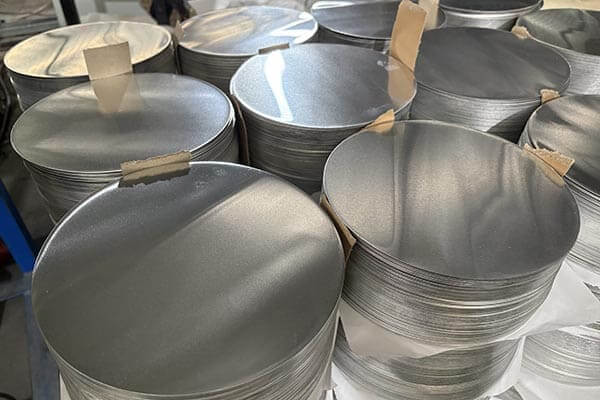
Hot rolling describes a manufacturing process in which metal is rolled at elevated temperatures to reduce thickness and shape into discs, plates, or blanks.
For kitchenware discs, hot rolling offers several practical advantages:
– Cost efficiency: The process is well-suited to high-volume production, delivering lower per-unit costs for discs in large sizes and thick-to-thin transitions.
– Dimensional stability: Hot-rolled discs typically exhibit stable dimensions with controlled flatness after appropriate finishing steps.
– Surface finish options: While hot-rolled surfaces can be rough straight from the mill, subsequent finishing (annealing, pickling, mechanical polishing) yields a variety of surface textures suitable for cookware bases or interior components.
– Mechanical behavior: The process helps avoid work-hardening in soft alloys like 1100, enabling predictable forming behavior during subsequent stamping, pressing, or riveting operations.
Practical Implications for Kitchenware Design
When designers and procurement teams consider 1100 Hot Rolled Aluminum Disc for Kitchenware, several design-specific implications matter:
– Thickness and diameter ranges: The discs can be produced in standard thicknesses (e.g., 0.5 mm to 3.0 mm and beyond, depending on customer needs) and diameters that align with pan bases, lids, or core layers.
– Surface options: A smooth, lightly textured, or coated surface can be chosen to meet aesthetic and functional requirements, including non-stick compatibility and cleaning efficiency.
– Forming compatibility: Because 1100 is highly formable, designers can implement complex base geometries, reinforcement ribs, or integrated weight features to optimize heat distribution without sacrificing manufacturability. –
Food safety and compliance: It is essential to align surface finishes and coatings with food-contact regulations and standards in target markets (for example, coatings must be BPA-free and free of harmful contaminants).
Manufacturing and Processing: From Raw Aluminum to Discs
Hot Rolling Process
The journey from raw aluminum to a finished 1100 disc typically follows these broad steps:
– Ingot or billet preparation: High-purity aluminum is cast into ingots and prepared for hot rolling. The starting material’s cleanliness and impurity control are vital for achieving consistent properties in the final discs.
– Pre-rolling and hot rolling: The material passes through a series of hot rollers at high temperatures to reduce thickness progressively. The objective is to reach the target disc thickness while maintaining workable grain structure.
– Coiling and annealing: After rolling, the material may be coiled and subjected to annealing to relieve residual stresses and restore ductility, ensuring the material remains workable for subsequent forming stages.
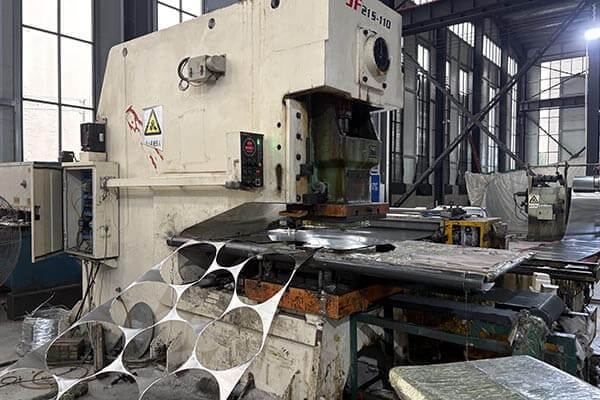
– Blank production: Discs are cut or blanked from the rolled sheet into the intended diameter for the final product. Blanking yields high-precision discs suitable for stamping, forming, or further finishing.
– Surface finishing: Depending on application, discs may undergo surface treatments such as pickling to remove scale, mechanical polishing for a smooth surface, or light brushing for texture. For kitchenware, surface quality often affects cleaning ease and food-contact safety.
– Inspection and packaging: Final discs are measured for thickness tolerance, flatness, and surface finish and then packaged for shipment.
Annealing and Surface Treatments
Annealing plays a pivotal role in 1100 discs, particularly to restore ductility after forming or to relax internal stresses from rolling.
For kitchenware discs, annealing benefits include:
– Improved formability for subsequent operations like deep drawing or forming complex base shapes.
– Reduced risk of cracking or tearing in heat-exposed or stress-prone areas.
– Enhanced surface finish acceptance for downstream coatings or bonding processes.
Surface treatments that commonly accompany 1100 discs include:
– Pickling and descaling: To remove oxide scales and ensure uniform surface quality.
– Mechanical finishing: Polishing, satin finishing, or light brushing to achieve desired aesthetics and reduced surface energy for coatings.
– Anodizing and coating compatibility: In some cases, anodizing is not used with 1100 due to pureness, but a compatible coating system (e.g., non-stick, food-grade epoxy, or polymer coatings) may be applied to meet product requirements.
– Food-safety coatings: If coatings are used, they should comply with regulatory standards for food-contact materials and avoid heavy metals or toxins.
Tolerances and Quality Control
Manufacturers set tolerances for thickness, flatness, and diameter to ensure consistent performance in downstream applications.
Typical tolerances in hot-rolled discs may be: – Thickness tolerance: ±0.05 mm to ±0.15 mm, depending on thickness and precision requirements.
– Diameter tolerance: ±0.5 mm to ±2.0 mm depending on disc size and process capability.
– Flatness: Measured as a deviation across the disc surface; tighter tolerances are necessary for uniform heat distribution in cookware bases.
Quality control steps commonly include:
– Raw material verification: Verifying composition and impurity levels against product specifications.
– In-process monitoring: Real-time measurements during rolling and blanking to ensure consistent thickness and flatness.
– Post-process inspection: Dimensional checks, surface finish verification, and non-destructive testing for hidden defects.
– Certification and traceability: Documentation of batch numbers, material lot traceability, and compliance with food-safety standards.
Material Properties and Performance for Kitchenware
Mechanical Properties
For a typical 1100 annealed disc (O-temper), mechanical properties reflect the alloy’s high ductility and low strength.
Representative ranges include: –
Yield strength: 15–40 MPa (depending on temper and processing)
– Tensile strength: 60–120 MPa
– Elongation at break: 20%–40% (excellent ductility)
– Hardness: Soft, measured on the Brinell or Vickers scale as relatively low
Note: These figures vary with processing history, tempering, and exact composition. In kitchenware applications, the emphasis is on formability and reliable heat transfer rather than high structural strength.
The discs are typically used as components that rely on flatness and bonding integrity rather than load-bearing capacity.
Thermal Conductivity and Heat Transfer
Aluminum’s high thermal conductivity makes 1100 discs particularly suitable for cookware bases, heat plates, and thermal buffering components.
Typical thermal conductivity for commercial-purity aluminum near room temperature is around 210–240 W/m·K. In practice, the actual performance will depend on:
– Surface finish and contact quality with other layers
– Presence of coatings or composites in multilayer cookware assemblies
– Disc thickness and diameter, which influence heat distribution paths
Corrosion Resistance and Food Safety
1100 aluminum’s corrosion resistance in ambient and aqueous environments is strong due to a protective oxide film that forms naturally on the surface.
For kitchenware, this is a critical attribute, but it is not sufficient alone:
– Food-contact compatibility: The metal itself is inert, but any coatings, bonding agents, or adhesives used in assemblages must meet food-safety standards.
– Cleaning and sanitizing: The disc must withstand dishwasher cleaning regimens or stone-cleaning processes without degradation of surface or coatings.
– Salt and acidic environments: While 1100 shows good resistance, prolonged exposure to harsh acidic or highly saline environments may require protective coatings or barriers to preserve surface integrity.
Environmental Impact and Recyclability
Aluminum is renowned for its recyclability, often reclaimed with little loss of properties.
The 1100 alloy, being near-pure, can be recycled with relative ease, and the recycling process generally consumes less energy than primary production.
For kitchenware manufacturers and end-users, this translates into:
– Reduced lifecycle energy footprint when recycling discs or scrap parts
– Alignment with sustainability initiatives and consumer expectations for responsible sourcing
– Opportunities for certifications (e.g., recycled content disclosures) that appeal to eco-conscious buyers
Design and Production Considerations for Kitchenware Discs
Thickness, Diameter, and Weight Management
When designing kitchenware that uses 1100 hot-rolled discs, engineers must balance heat distribution with ergonomics and cost:
– Thicker discs offer better heat retention and structural stability, especially in pan bases or core layers, but may add weight and cost.
– Thinner discs reduce weight and material costs but require careful control of flatness and bonding integrity to avoid warping during heating.
– Weight distribution is vital for cookware balance; designers may combine 1100 discs with other materials in multilayer constructs to optimize performance.
Surface Finish and Coatings Compatibility
Food-contact surfaces demand particular finish properties:
– Bare 1100 discs may be used when a natural metal surface fulfills the design intent, but for many kitchenware products, a protective coating or non-stick layer is applied.
– Coating compatibility: It is crucial to ensure adhesion of coatings to aluminum and to avoid delamination during repeated temperature cycles.
– Cleaning and maintenance: A smoother surface often simplifies cleaning, but texture can aid non-stick performance when paired with appropriate coatings.
Forming, Stamping, and Bonding
1100’s formability enables wide options for base shapes, reinforcement features, and integrated components:
– Deep drawing and stamping: The alloy’s ductility helps it to form complex base shapes without cracking.
– Bonding and joining: For assembled bases, adhesives and mechanical fasteners must be compatible with aluminum and any coatings applied. Primers and surface pretreatments can boost bonding strength.
– Thermal cycling: Since cookware experiences repeated heating and cooling, designers should anticipate potential microstructural changes and stress relief requirements.
Surface Integrity and Inspection Methods
To ensure long-term performance and safety, surface integrity checks might include:
– Visual inspection for scale, burrs, or surface defects after finishing.
– Flatness and thickness measurements using precision metrology tools.
– Adhesion tests for coatings to ensure robust performance through cleaning cycles.
Applications and Market Trends
Core Applications for 1100 Hot Rolled Discs in Kitchenware
- Base plates for skillets, frying pans, and woks: Thick discs provide uniform heat distribution and structural stability.
- Lids and lid assemblies: Discs can serve as core components for precise lid fit and sealing.
- Contact plates and heat spreaders: Used in combination with other materials to optimize heat transfer.
- Multilayer cookware cores: 1100 discs can serve as one layer in laminated or clad constructs that pair with stainless steel or other alloys to achieve desired performance and aesthetics.
Market Trends and Demand Drivers
- Demand for lightweight, energy-efficient cookware: Aluminum’s low density makes discs attractive for lighter, efficient designs.
- Emphasis on food safety and regulatory compliance: Brands demand clear documentation on material purity and coatings to meet global standards.
- Sustainability and recyclability: Consumers increasingly favor products with recycled content and responsible sourcing; aluminum’s recyclability supports circular economy models.
- Customization and rapid prototyping: Advances in rolling mill capabilities enable smaller batch production and rapid customization for boutique or promotional cookware lines.
Comparative Use Cases
Consider the following specific scenarios where 1100 hot-rolled discs provide practical benefits:
– A mid-tier cookware brand seeking cost-effective base plates for 28–32 cm pans can optimize cost by selecting 0.8–1.5 mm thick discs with a suitable surface finish and a food-grade coating.
– A boutique kitchenware line that values high formability might use discs for custom pan bases with embossed patterns or integrated heat-diffusing features, leveraging the ductility of 1100.
– A high-volume supplier producing sets of lids and pans with standardized discs can benefit from the scale and process maturity of hot-rolled production, achieving reliable flatness and reproducibility.
Supplier and Industry Landscape
Huawei Aluminum: A Reputable Supplier Profile
Huawei Aluminum Co., Ltd. is a recognized producer in the aluminum sector, known for a broad range of aluminum plates, sheets, and related products.
While the aluminum market includes several global players, Huawei Aluminum has built a strong reputation for:
– Extensive product lines in the 1xxx to 8xxx series, including highly pure aluminum suitable for food-contact applications.
– Capable manufacturing facilities with end-to-end processes—from casting and rolling to surface finishing and packaging.
– Emphasis on quality assurance, certifications, and customer-specific solutions, including custom thicknesses and diameters to meet kitchenware requirements.
– A global customer base spanning appliance manufacturers, cookware brands, and metal retailers, reflecting experience in large-scale production as well as more tailored orders.
Important considerations for buyers when engaging Huawei Aluminum or similar suppliers:
– Certifications: Look for ISO 9001 quality management, ISO 14001 environmental management, and any industry-specific certifications for food-contact materials (e.g., FDA or EU food-contact compliance where applicable).
– Traceability: A robust system that tracks material origin, batch numbers, and production history supports quality assurance and regulatory compliance.
– Technical support: Access to metallurgical data, tolerance charts, and surface-finishing capabilities helps translate raw material specifications into finished discs suitable for kitchenware.
– Customization: The ability to tailor thicknesses, diameters, and surface finishes to fit product designs reduces the need for post-processing and accelerates time-to-market.
Other Industry Players and Competitive Landscape
In addition to Huawei Aluminum, the market features a mix of national and multinational producers with strong capabilities in 1xxx-series aluminum.
Buyers often consider factors such as:
– Process capability: The ability to deliver consistent hot-rolled discs across different production runs and to scale with demand.
– Surface finishing options: The availability of pickling, polishing, brushing, or coating services directly from the supplier helps streamline production.
– Logistics and supply chain reliability: Timely delivery, packaging quality, and flexible MOQs influence procurement decisions for large cookware manufacturers.
– Price transparency: Clear pricing models, including tariff considerations for cross-border shipments and any customization fees for non-standard sizes.
Quality Assurance and Certifications
Process Control and Laboratory Testing
A robust supplier will implement a multi-layered QA approach:
– Incoming material inspection: Verifies composition, impurity content, and conformance to the 1100 aluminum standard.
– In-process control: Monitors rolling temperatures, thickness, flatness, and surface condition to ensure consistent production.
– Final inspection: Uses dimensional metrology and surface inspection to confirm that discs meet tolerances before packaging.
Certifications and Compliance
To instill confidence among kitchenware manufacturers and retailers, suppliers typically hold:
– ISO 9001: Quality management systems standard that ensures consistent processes and continuous improvement.
– ISO 14001: Environmental management, which demonstrates a commitment to sustainable production and waste minimization.
– Industry-specific certifications for food-contact materials (as applicable in target markets), including compliance with RoHS, REACH, and other regulatory frameworks.
– Third-party testing and material traceability documentation to support supply chain transparency.
Documentation for Buyers
A credible supplier provides:
– Material data sheets (MDS) with chemical composition, mechanical properties, and physical properties.
– Processing parameters and tolerances for hot rolling, annealing, and finishing steps.
– Coating and surface-treatment specifications, including adhesion test results and compatibility with cookware coatings.
– Certificates of analysis (COAs) for each batch, along with traceability records.
Comparisons: 1100 Hot Rolled Disc for Kitchenware vs Alternatives
| Alloy / Grade | Typical Use in Kitchenware | Formability | Heat Distribution | Corrosion Resistance | Cost (relative) | Remarks |
|---|---|---|---|---|---|---|
| 1100 (1xxx) | Discs, bases, core components, cookware interactions | Excellent | Good to very good, depending on thickness and finish | Excellent in ambient and mild environments; excels in food-contact contexts when finished properly | Baseline to moderate | Pure alloy; high ductility; easy to form; best for non-structural loads |
| 3003 | Cookware alloys for lighter bases; more strength than 1100 but still ductile | Good | Moderate | Good | Moderate | Higher strength than 1100 but less formable without work hardening; often used in deep drawing |
| 5052 | Structural and semi-rigid parts; better strength | Moderate | Moderate to good | Good | Higher | More strength but less formable than 1100; often used when rigidity is required |
| 1100 vs 5052 | Core comparison in heat exchange plates | 1100 superior for deep drawing and forming; 5052 for rigidity when needed | Similar if thickness matched | Both strong in typical kitchen environments; coating choices affect performance | 1100 generally more cost-effective for high volumes | Use depending on design goals: formability vs. rigidity |
Notes:
– The table reflects general industry observations and may vary by processing route, temper, and finishing steps.
– In practice, many manufacturers use multilayer constructs that combine 1100 discs with stainless steel or other aluminum alloys to balance heat transfer, weight, and mechanical performance.
FAQs
1) What is the difference between hot rolled and cold rolled aluminum?
– Hot rolled aluminum involves processing at high temperatures, which yields better formability and lower cost for large-scale production. Cold rolled aluminum is processed at room temperature, resulting in tighter tolerances, improved surface finish, and higher strength after work hardening. For kitchenware discs where formability and cost are primary concerns, hot rolling is a common choice, often followed by annealing and finishing to meet exact specifications.
2) Is 1100 suitable for food-contact cookware?
– Yes, 1100 aluminum is widely used in food-contact applications due to its high purity and corrosion resistance. However, safety in cookware depends not only on the base metal but also on coatings, seals, bonding agents, and surface finishes. When designing kitchenware that will be in contact with food, ensure coatings and adhesives comply with relevant food-safety standards for target markets.
3) What temper is typical for 1100 discs used in kitchenware?
– O-temper (annealed) is common for raw discs due to high formability. After forming, discs or components may be annealed again to relieve stresses. Some applications may use work-hardened tempers if higher strength is required, but these reduce formability.
4) Can 1100 hot-rolled discs be coated for non-stick or other finishes?
– Yes. Coatings and surface treatments are commonly applied to 1100 discs for cookware. Compatibility between the coating and aluminum surface matters, and adhesion tests are typically performed to ensure durable performance through cleaning cycles and cooking temperatures.
5) What are typical lead times when ordering from a supplier like Huawei Aluminum?
– Lead times depend on order quantity, customization (diameter, thickness, coating), and current production schedule. For standard dimensions in large-volume runs, lead times can range from a few weeks to a couple of months. For custom orders, plan earlier and coordinate with the supplier to confirm feasibility and timeline.
6) How does 1100 compare to other commonly used aluminum alloys in kitchenware?
– 1100 offers superior formability and cost advantages for non-structural components. Alloys like 3003 offer a balance of formability and strength, while 5052 provides higher strength at the cost of reduced ductility. The choice depends on the specific design requirements, including heat transfer, weight, coating compatibility, and manufacturing process.
Conclusion
The 1100 Hot Rolled Aluminum Disc for Kitchenware represents a practical, versatile option for a range of cookware components, with a compelling combination of formability, cost efficiency, and food-contact suitability.
Its performance is enhanced when producers apply deliberate processing steps—hot rolling with careful annealing, precision blanking, and appropriate surface finishing—coupled with rigorous quality assurance and robust supplier partnerships.
For kitchenware manufacturers seeking a dependable supplier with the capacity to deliver customized discs at scale, Huawei Aluminum offers a credible profile of capability and reliability.
Engaging with such suppliers requires clear specifications, validated test data, and a collaborative approach to design, finishing, and quality control.
When executed well, 1100 discs can contribute to cookware that is not only economical and functional but also consistent in performance and safe for consumers.
As markets evolve toward greater sustainability and demand more customized, high-performance kitchenware, the role of 1100 hot-rolled discs as core components will continue to be relevant.
The emphasis will remain on material integrity, process discipline, and collaboration among designers, manufacturers, and suppliers to deliver products that meet evolving needs without compromising safety, reliability, or value.
If you’re evaluating options for your next line of kitchenware, consider how 1100 hot-rolled discs fit within your design goals, cost framework, and regulatory commitments—and how a trusted supplier like Huawei Aluminum can help you realize a streamlined, compliant, and market-ready solution.
Share with PDF: Download