
Introduction
The kitchen is where design meets daily life, where material science translates into practical utility. Among the durable, cost-effective options for cookware and kitchenware components, the 1xxx-series aluminum circle—specifically the 1060 grade—stands out for its exceptional formability, corrosion resistance, and suitability for deep drawing.
This article explores the topic of 1060 Deep Drawing Aluminum Circle for Kitchenware in depth, covering material properties, manufacturing considerations, applications, market dynamics, and practical guidance for buyers and manufacturers.
It also features a supplier spotlight on Huawei Aluminum, a major player in the Chinese and global aluminum supply chain, highlighting how they serve customers who need reliable 1060 circles for kitchenware.
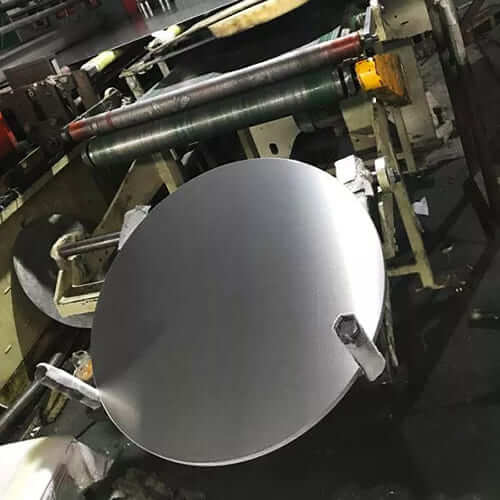
For readers who want a concise orientation up front: 1060 Deep Drawing Aluminum Circle for Kitchenware refers to circles cut from 1060 aluminum sheet that are intended for forming into cookware bases, lids, and other circular components via deep-drawing processes.
The term underscores two ideas at once: the alloy (1060, a commercially pure aluminum) and the forming method (deep drawing) that produces seamless, thick, round parts with smooth edges—ideal for pans, pots, trays, and related kitchenware. This combination delivers high ductility, excellent surface finish potential, and predictable performance in a wide range of domestic and professional kitchen environments.
In today’s optimization-heavy market, buyers increasingly demand materials that balance formability, cost, and compliance with food-contact standards.
1060 aluminum circles support that balance well when sourced from reputable suppliers such as Huawei Aluminum, which maintains a broad portfolio of 1xxx-grade products and a robust manufacturing and logistics network to meet global demand.
The following sections provide a comprehensive, practical roadmap for professionals seeking to understand, compare, and select 1060 deep-drawing circles for kitchenware.
Why 1060 Deep Drawing Aluminum Circle for Kitchenware matters
Deep Drawing Fundamentals
Deep drawing is a metal forming process in which a flat blank is radially drawn into a forming die by the mechanical action of a punch.
Materials with high ductility, low yield, and low work-hardening tendencies are especially well-suited to deep drawing. 1060 aluminum, with more than 99.60% aluminum content and minimal alloying elements, exhibits exceptional formability, especially in annealed conditions (O-temper). For kitchenware, deep drawing enables:
- Seamless, uniform circular shapes without welds
- Deep geometric profiles (e.g., pan bottoms with substantial depth)
- Excellent edge quality with minimal burrs after finishing
- Reduced risk of work hardening and cracking during high-volume production
These attributes translate into cost savings via lower tooling wear, fewer rework cycles, and improved aesthetics in consumer-facing products.
Material Suitability and Formability
1060 aluminum circles offer: – High ductility and elongation in O-temper, enabling deep draws with wide radii
– Good resistance to corrosion in typical kitchen environments (water, salt, detergents)
– Ease of chemical passivation and surface finishing (polished, brushed, or coated)
– Recyclability and environmental advantages (low-energy recycling relative to some other metals)
However, as with any material choice, there are trade-offs:
– Relatively low strength compared with heat-treatable alloys, which is acceptable for most cookware bases and lids but limits heavy-load structural applications
– Thermal conductivity is excellent (facilitating uniform heat distribution in cookware) but not a substitute for actual heat-treatment-based strength improvements
– Anodizing or coating processes may alter appearance and surface texture, so process control is important for consistency
In practice, manufacturers select 1060 circles for kitchenware because they deliver a reliable combination of formability, appearance, and compatibility with common cooking conditions.
Material profile: 1060 Aluminum Circle
Chemical Composition
1060 aluminum is a commercially pure alloy in the 1xxx series. Typical composition ranges for 1060 include:
– Aluminum (Al): minimum 99.60%
– Silicon (Si): ≤0.6%
– Iron (Fe): ≤0.95%
– Copper (Cu): ≤0.05%
– Manganese (Mn): ≤0.05%
– Zinc (Zn): ≤0.05% – Other elements: limited amounts, with total impurities usually kept below 0.15%
The high aluminum content is what gives 1060 its hallmark properties: high ductility, good corrosion resistance, and excellent workability.
These properties make it an ideal candidate for deep-drawn kitchenware shapes where uniformity and surface finish are critical.
Mechanical Properties
Mechanical properties vary with temper and thickness, but typical ranges for 1060 in O-temper (annealed) are:
- Yield strength (0.2% offset): approximately 15–30 MPa
- Ultimate tensile strength (UTS): roughly 90–120 MPa
- Elongation at break: often in the 25–40% range, depending on thickness and process
- Hardness (Brinell or Rockwell): relatively soft (low HB values)
Because 1060 is not a precipitation-h hardenable alloy, its strength relies on the intrinsic ductility of the material and the design of the forming process rather than post-forming heat treatment. This characteristic is a core reason for its popularity in deep-drawn shapes.
Formability and Deep Draw Capability
Reasons 1060 circles perform well in deep drawing:
– High elongation and low work hardening rate enable multiple draws without cracking
– Softness of the O-temper reduces lubrication demands in the draw process
– Uniform grain structure in rolled sheets promotes predictable forming behavior
Formability is also influenced by thickness, diameter, and the design of the punch and die.
In practice, facilities optimize lubricants, blank sizes, and draw radii to achieve consistent, repeatable results.
Corrosion Resistance and Food Safety
1060 aluminum offers excellent corrosion resistance in many culinary environments, making it appropriate for food-contact applications when compliant coatings and processing are used.
The material’s purity level minimizes alloying elements that could otherwise interact with food acids over time.
For food safety, suppliers typically:
– Ensure surface cleanliness and passivation compatibility with standard food-contact coatings
– Use cleanroom or controlled environment practices in final assembly to minimize surface contamination
– Provide certificates for compliance with applicable food-contact standards (e.g., FDA or EU food-contact guidelines) as per customer requirements
Thermal Conductivity and Heat Response
Aluminum’s high thermal conductivity is advantageous in cookware and kitchenware. The thermal conductivity of 1060 aluminum is approximately 205–250 W/m·K at room temperature, enabling rapid heat distribution across a pan bottom.
In practice, this property helps achieve even cooking and reduces hot spots. For deep-drawn circles, stable thermal performance translates into consistent cooking behavior and consumer satisfaction.
Manufacturing process overview
Rolling, Annealing, and Circle Cutting (Circles formation)
1060 circles begin as extruded or rolled sheets. The steps typically include:
1) Slab or sheet casting or continuous casting to rolling stock
2) Hot rolling to intermediate thickness, then cold rolling to final gauge
3) Annealing (to achieve O-temper or other desired temper)
4) Circular blanking or punching to create production circles
5) Edge trimming and deburring to ensure smooth finish and safe handling
6) Surface treatment (optional) and packaging
Key process controls:
– Tight gauge control to meet diameter tolerances
– Flatness and camber control to ensure uniform material behavior in deep drawing
– Lubrication and stamping parameters tuned for specific thickness and diameter
Annealing and Temper
To maximize formability for deep drawing, the material often needs annealing into O-temper.
Annealing conditions (temperature and time) are designed to restore ductility after previous work hardening from rolling or punching.
The temper impacts draw limits, wall thickness uniformity, and edge quality.
Customers frequently specify temper (e.g., O or mild softening) to preserve the best deep-draw performance.
Edge Finishing and Surface Quality
Post-processing edge finishing is essential for safety and aesthetics:
– Burr removal and edge rounding produce safer edges for consumer handling
– Surface quality (mill finish vs. brushed or polished) affects consumer perception and can influence adhesion for coatings
– Surface treatments (e.g., anodizing, protective coatings) may be applied to enhance durability or appearance
Quality Control and Packaging
Quality control (QC) steps typically include: – Dimensional checks: diameter tolerance, roundness, and edge integrity
– Surface inspection: absence of scratches, pits, or burrs
– Chemical analysis to verify alloy composition
– Packaging in protective materials suitable for long-distance transport to preserve surface quality
Packaging considerations include anti-scratch padding, moisture protection, and labeling with material specifications, lot codes, and supplier information to enable traceability.
Applications in kitchenware
Cookware Bases and Lids
1060 circles are commonly used for cookware components that require exceptional formability and a smooth, uniform surface.
Typical applications include:
– Pan bases for skillets and frying pans where a seamless circle forms the bottom
– Lids and lid discs that require precise roundness and good sealing surfaces
– Mixing bowls and trays where circular geometry and corrosion resistance matter
Reflective Surfaces and Decorative Items
In addition to functional components, 1060 circles may serve decorative purposes or reflective interior surfaces in premium cookware, surfaces that benefit from aluminum’s reflectivity and polishability.
Small Kitchen Accessories
Beyond cookware bases, 1060 circles find use in smaller kitchen items, such as:
– Heat diffusion discs integrated into portable hot plates
– Small circular trays and racks – Induction-compatible pots or frames when combined with suitable coatings
Comparative Strength in Everyday Use
Compared to higher-strength alloys, 1060 circles emphasize consumer safety, ease of manufacturing, and cost efficiency—particularly valuable in mass-market kitchenware where high production volumes drive down per-unit cost.
While not designed for high-load structural duties, 1060 circles perform robustly in normal household cooking scenarios and standard commercial kitchen environments.
Market overview and supply chain dynamics
Global Demand Trends
- Demand drivers: consumer demand for durable, corrosion-resistant, and cost-effective cookware; environmental considerations encouraging recyclability; the growth of home cooking and professional kitchens.
- Regional variations: Asia remains a major producer and supplier base, with growing demand in Europe and North America for food-grade aluminum tooling and kitchen components.
- Price dynamics: aluminum prices are influenced by energy costs, supply chain constraints, and geopolitical factors. For 1060 circles, price is driven by alloy purity, thickness, diameter, tolerances, surface finish, and packaging requirements.
Supplier Landscape
- The 1060 circle market includes a mix of small, specialized mills and large integrated producers. Key considerations when selecting a supplier include:
- Material purity and traceability
- Consistency of diameter, roundness, and edge quality
- Availability of desired thicknesses and diameters
- Delivery times and logistics capabilities
- Compliance with food-contact standards and packaging specifications
- Customer support and post-sale service
Huawei Aluminum, a prominent supplier in this space, combines a broad product line (including 1xxx-series alloys) with a robust production and distribution network.
For buyers who require reliable supply, scalable capacity, and consistent quality, Huawei Aluminum represents a credible option to consider alongside other established players in both Asia and emerging markets.
Huawei Aluminum: Supplier Spotlight
Huawei Aluminum is a recognized name in the aluminum sector, offering a wide range of products including 1060 aluminum circles and sheets.
Their strengths include:
– Integrated production process from ingot to finished circles
– Capability to meet large-volume demand with tight tolerances
– Capability to provide customized circle dimensions and tolerances according to customer specifications
– Experience serving global customers with export-focused logistics
Why buyers might choose Huawei Aluminum:
– Proven track record in 1xxx-series circles
– Flexible manufacturing to accommodate special orders, including custom diameters and thicknesses
– Emphasis on quality control processes and traceability
– Competitive pricing built on scale and efficiency
When engaging Huawei Aluminum, buyers typically request detailed product specifications (composition, temper, thickness, diameter range, tolerances), along with samples for testing and certification documents for food-contact compliance.
Comparisons: 1060 vs other common aluminum circles for deep drawing
To support informed decision-making, here is a concise comparison table of typical aluminum circles used in deep drawing for kitchenware.
The table highlights key attributes that affect formability, cost, and suitability for kitchenware applications.
| Grade | Approximate major alloying elements | Typical formability (O-temper) | Common kitchenware applications | Advantages | Limitations / Considerations |
|---|---|---|---|---|---|
| 1060 | Al 99.60%+ | Excellent | Pan bases, lids, trays, and similar components | Highest ductility among common 1xxx grades; superb drawability; lowest alloying impurities; easy processing | Lower strength than other alloys; not suitable for heavy-load or high-temperature structural parts; needs coatings for certain surfaces |
| 1050 | Al ~99.50% | Very good | Food packaging, lightweight containers | Good formability; reliable corrosion resistance; simple processing | Slightly less pure than 1060; marginally higher risk of surface defects under aggressive drawing conditions |
| 1100 | Al ~99.00% | Good | Thin-walled cookware components; decorative items | Moderate strength with good drawability | Lower corrosion resistance than purer 1xxx grades in some environments; slightly reduced ductility compared to 1060 |
| 3003 | Al-Mn (approx. 1.0–1.5% Mn) | Good to very good | Cookware bottoms, heat exchangers, and some forms of packaging | Higher strength than 1xxx; good workability | Lower corrosion resistance than pure 1xxx grades; not as price-competitive in some markets; more manganese may alter surface finish |
Notes: – Formability is context-dependent and depends on temper, thickness, tooling, and lubricants. – For deep drawing, manufacturers frequently optimize tempers to balance draw depth and surface quality. – In consumer cookware manufacturing, the choice of grade will also depend on coatings (e.g., nonstick finishes) and assembly methods.
These comparisons illustrate why 1060 remains a leading option for deep drawing in kitchenware: it delivers superior formability and a smooth, consistent surface ideal for high-volume production of circular components.
Quality assurance and compliance considerations
Testing methods and process controls
Quality assurance for 1060 circles used in kitchenware typically includes:
– Dimensional inspection: diameter accuracy, roundness, flatness, and edge quality
– Visual inspection: surface blemishes, scratches, and burrs
– Chemical composition verification: confirming Al content and impurities
– Mechanical property checks: confirming temper and ductility through standard tests (when required)
– Surface finish verification: match to intended finish (mill, brushed, polished)
– Food-contact suitability checks: ensuring coatings or finishes meet relevant regulations and that residues from manufacturing do not contaminate surfaces
Process controls focus on:
– Lubrication and die design to minimize drawing resistance and prevent tearing
– Lubricant selection to minimize galling and ensure repeatable draws
– Cleanliness of blanks to maintain surface integrity
– A robust quality management system (QMS) that tracks material lot numbers, supplier certificates, and test results
Certifications and standards
For cookware and food-contact applications, suppliers and manufacturers often reference standards and certifications such as:
– Food-contact compliance (e.g., FDA, EU Regulation 1935/2004)
– Material traceability documentation and product certificates
– ISO 9001 quality management (for manufacturers and suppliers)
– Environmental and sustainability credentials (where applicable)
When evaluating suppliers, buyers should request copies of certificates, test reports, and any compliance documentation relevant to their target markets (e.g., Europe, North America, Asia-Pacific).
Reliability and traceability
Traceability is crucial for kitchenware components.
Reputable suppliers maintain:
– Batch-level traceability from raw material to finished product
– Lot numbers on packaging and certificates
– Clear records of process parameters (temper, thickness, diameter, tolerances)
Traceability supports recalls, quality improvements, and compliance with purchasing requirements in large retail and food-service contexts.
Practical guidance for buyers
If you are a manufacturer, distributor, or end-user procurement professional evaluating 1060 deep drawing circles for kitchenware, these practical steps can help you secure reliable performance and value.
How to specify 1060 Deep Drawing Aluminum Circle for Kitchenware
- Alloy grade: specify 1060, with a clear temper (e.g., O-temper for maximum drawability)
- Thickness: provide a precise gauge (e.g., 0.5 mm, 1.0 mm, etc.) or range with tight tolerances
- Diameter and tolerance: specify exact diameters with permissible deviations (e.g., diameter 300 mm ± 0.5 mm)
- Edge quality: specify burr-free edges with radius and corner tolerances
- Surface finish: mill finish, brushed, or polished; specify whether coatings are required
- Food-contact compliance: require FDA, EU 1935/2004 compliance or equivalent documentation
- Packaging: specify anti-scratch packaging, moisture barrier, labeling, and traceability documentation
- Certifications: request ISO 9001, material certificates (e.g., mill test report), and any third-party testing where required
- Lead time and capacity: confirm production capacity, lead times, and ability to scale for large orders
- Environmental and sustainability: request recycling and environmental process details, if relevant
Price negotiation and order quantities
- Price is influenced by diameter, thickness, tolerances, surface finish, packaging, and lead time.
- For 1060 circle orders, minimum order quantities (MOQs) can vary by supplier and diameter, so negotiate the best combination of price, quality, and delivery.
- Consider long-term contracts for predictable pricing, including supply guarantees and quality control commitments.
Transport, packaging, and handling
- Use packaging that protects the circular edges and surface finish during transit
- Consider climate-controlled or humidity-protected packaging for longer shipments
- Ensure proper labeling with material specifications, lot numbers, and vendor information to facilitate traceability at the destination
Quality checks upon receipt
- Perform a quick dimensional check on a sample of circles (diameter, flatness, roundness)
- Inspect edge quality and surface finish
- Confirm the presence of required certificates and packaging information
- If necessary, conduct a short-term functional test by performing a few trial draws to validate process compatibility
Supplier selection tips
- Prefer suppliers with a consistent track record in 1xxx-series circles and a robust QA program
- Seek samples for initial evaluation, including test drawings and an assessment of draw performance
- Request third-party test results and material certifications for chemical composition
- Evaluate after-sales support: response times, replacement policies for defective materials, and willingness to provide custom sizes or tolerances
- Compare logistical capabilities: shipping modes, lead times, and international compliance documentation
- Consider a supplier like Huawei Aluminum for access to a broad product range, scalable capacity, and global logistics options, while also evaluating other reputable producers to diversify supply risk
Case study-style insights: optimising 1060 circles for a cookware line
A mid-sized cookware manufacturer planned to switch to a new supplier for 1060 circles used as pan bases and lids.
The goals were to achieve tighter diameter tolerances, more uniform edge quality, and shorter lead times.
They evaluated three suppliers, including Huawei Aluminum, by requesting samples for draw testing, certificates of analysis, and surface finish options.
Key outcomes:
– The selected supplier demonstrated tighter diameter tolerances (±0.3 mm vs ±0.5 mm) and improved edge quality, resulting in fewer reworks during stamping
– Draw trials showed consistent performance with O-temper circles at 0.8–1.5 mm thickness for pan-base applications
– Lead times improved by 20–30% due to better logistics and production batching
– The supplier provided clear traceability and documentation, enabling seamless integration into the client’s supply chain
This case suggests how a focused vendor evaluation—emphasizing formability, tolerances, and supply chain reliability—can deliver measurable improvements in production efficiency and final product quality.
The 1060 circle supply ecosystem: environmental and sustainability considerations
Sustainability is increasingly a top priority for manufacturers and retailers. The 1xxx-series aluminum is known for high recyclability and relatively low energy input during remanufacturing. Key sustainability considerations include:
- Recycling: Aluminum is highly recyclable, and recycled aluminum requires significantly less energy than primary production. This characteristic supports circular economy goals for kitchenware manufacturers.
- Life-cycle assessment: Supply chain partners can provide life-cycle analyses that consider energy use, emissions, and recycling rate for 1060 circles.
- Waste reduction: Efficient blanking and trimming processes reduce scrap, lowering material waste and energy consumption.
- Packaging sustainability: Reducing packaging weight and using recyclable materials aligns with eco-friendly goals.
Buyers seeking green supply chains can prioritize suppliers that provide transparent sustainability data and demonstrate consistent performance on environmental metrics.
Frequently asked questions (FAQs)
Q1: What is the standard thickness for 1060 aluminum circles used in kitchenware?
– A: Thickness varies by product design. Common thickness ranges include 0.5 mm, 0.8 mm, and 1.0 mm, with tolerances typically on the order of ±0.05 mm. For deep drawing, thinner gauges often maximize draw depth, while thicker gauges provide more stiffness. The exact specification should be confirmed with the supplier based on the intended drawing process and final product requirements.
Q2: Why choose 1060 for deep drawing instead of other 1xxx grades?
– A: 1060 offers the highest ductility among common 1xxx alloys and the simplest alloying system, which translates to superior deep-draw performance, fewer defects, and lower tooling wear. If edge aesthetics and surface finish are priorities for high-volume drawing, 1060 is often the best choice. If higher strength is needed for a given design, other alloys (or alloys with post-processing) may be considered, but at the cost of formability.
Q3: How does temper affect deep drawing performance?
– A: Temper determines ductility and work-hardening behavior. O-temper (annealed) shows the highest ductility, enabling deeper draws with less cracking risk. If the process requires some strength after forming, designers may consider mild tempering or other tempers, but this can reduce drawability.
Q4: What kinds of coatings are commonly applied to 1060 circles used in kitchenware?
– A: Common coatings include nonstick (PTFE-based), ceramic coatings, or anodizing for corrosion resistance and surface aesthetics. Coatings are typically applied after the circle is formed and edge-trimmed. Coating compatibility with food contact should be verified, and suppliers often provide guidance on coating compatibility.
Q5: How important is edge quality in deep-drawn kitchenware components?
– A: Very important. Burrs or sharp edges can cause safety issues during handling and assembly, affect seating tolerances, and impact consumer perception. High-quality edge finishing reduces the risk of injury, ensures better fit, and improves the overall finish.
Q6: What is the role of supplier certifications and documentation?
– A: Certifications (e.g., ISO 9001, material certificates, CTAs, and food-contact compliance) help verify process consistency, material composition, and regulatory adherence. Access to test reports, batch traceability, and compliance documentation reduces procurement risk, particularly for regulated markets.
Q7: How do material cost and energy prices influence the price of 1060 circles?
– A: Material cost reflects aluminum price and purity; energy costs influence rolling, annealing, and finishing processes; logistics costs affect freight. All these factors combine to determine unit price. For durable, high-volume kitchenware components, long-term contracts and efficient logistics can stabilize costs.
Q8: Why would a buyer consider Huawei Aluminum for 1060 circles?
– A: Huawei Aluminum offers a proven track record in 1xxx-series circles, robust manufacturing capabilities, product customization options, and global logistics. Buyers seeking reliable supply, consistent quality, and scalable production often find Huawei Aluminum to be a credible partner for 1060 circles for kitchenware.
Conclusion
1060 Deep Drawing Aluminum Circle for Kitchenware represents a pragmatic convergence of material science and consumer product design.
Its high ductility, excellent formability, and favorable corrosion resistance—paired with cost effectiveness—make it particularly well-suited for deep-drawn circular components in cookware and related kitchenware.
The supplier landscape includes established players such as Huawei Aluminum, whose capabilities in producing high-quality 1060 circles and delivering reliable service can support both mass-market manufacturers and specialty producers.
As the kitchenware market continues to emphasize performance, aesthetics, and sustainability, selecting the right 1060 circle involves more than a price quote.
It requires understanding the material profile, the forming process, and the supply chain you will rely on to bring products to market efficiently.
The insights in this article, including technical data, process considerations, market dynamics, supplier considerations, and practical buyer guidance, aim to equip professionals with a comprehensive framework to evaluate, qualify, and source 1060 circles for kitchenware with confidence.
By integrating 1060 Deep Drawing Aluminum Circle for Kitchenware into a thoughtful design and procurement strategy—while partnering with reliable suppliers like Huawei Aluminum—you can achieve dependable manufacturing outcomes, consistent product quality, and a strong competitive edge in a crowded kitchenware market.
The combination of material purity, extreme formability, and disciplined supplier collaboration paves the way for durable, attractive, and affordable kitchenware components that meet customer expectations and regulatory requirements now and into the future.
Share with PDF: Download