
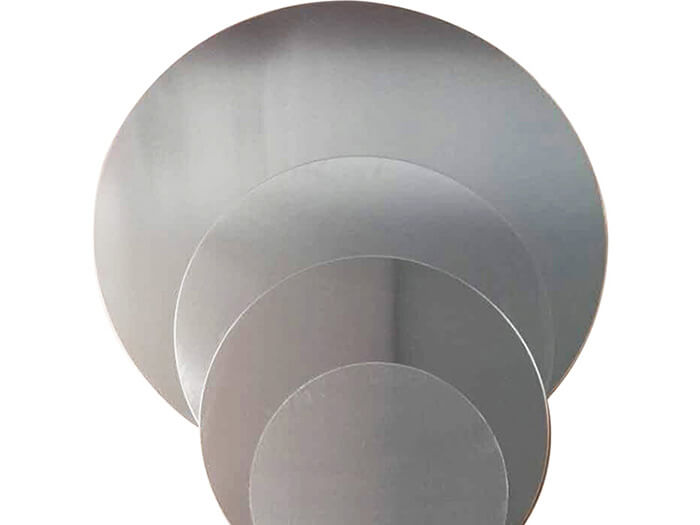
Introduction: The Unseen Backbone of Modern Manufacturing
In countless products we use daily, from the cookware in our kitchens to the lighting fixtures above us and the road signs guiding our journeys, aluminum circles play a crucial, often unseen, role. Among the various alloys, the 1050 aluminum circle holds a significant position due to its exceptional properties and versatility. Understanding the intricacies of an aluminum circle 1050 factory is paramount for businesses seeking high-quality, reliable components for their manufacturing processes. This guide delves deep into the world of 1050 aluminum circles, exploring their characteristics, the sophisticated manufacturing processes involved, critical quality control measures, diverse applications, and what sets a leading manufacturer like Huawei Aluminum apart.
Huawei Aluminum, a prominent name in the aluminum industry, operates a state-of-the-art aluminum circle 1050 factory, dedicated to producing superior quality aluminum discs that meet the stringent demands of global markets. We combine decades of expertise with cutting-edge technology to deliver products that empower innovation across various sectors.
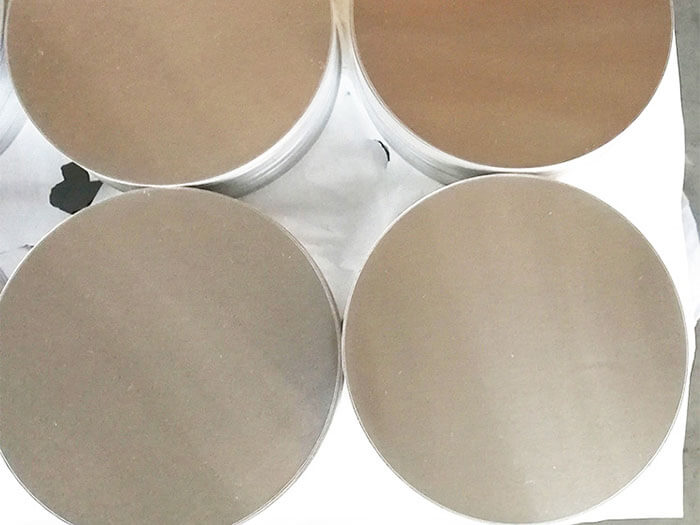
Chapter 1: Understanding Aluminum Alloy 1050 – The Foundation of Quality Circles
Before we explore the factory operations, let’s understand the material itself. Aluminum 1050 is a commercially pure wrought aluminum alloy, part of the 1xxx series. This series is characterized by a minimum aluminum content of 99.0%.
-
High Purity: Alloy 1050 typically contains 99.5% aluminum. This high purity imparts several desirable characteristics:
-
Excellent corrosion resistance, especially in neutral or mildly acidic environments.
-
High electrical and thermal conductivity.
-
Exceptional workability and formability.
-
-
Low Mechanical Strength: Compared to heat-treatable alloys, 1050 aluminum has relatively low mechanical strength. However, its strength can be increased through cold working (strain hardening).
-
Non-Heat Treatable: The strength of 1050 aluminum is primarily achieved through cold working, not heat treatment.
Table 1: Typical Chemical Composition of Aluminum Alloy 1050 (as per EN AW-1050A / ISO Al99.5)
| Element | Content (%) |
| Aluminum (Al) | ≥ 99.5 |
| Silicon (Si) | ≤ 0.25 |
| Iron (Fe) | ≤ 0.40 |
| Copper (Cu) | ≤ 0.05 |
| Manganese (Mn) | ≤ 0.05 |
| Magnesium (Mg) | ≤ 0.05 |
| Zinc (Zn) | ≤ 0.07 |
| Titanium (Ti) | ≤ 0.03 |
| Other (each) | ≤ 0.03 |
| Total Others | ≤ 0.03 (often specified tighter) |
The controlled, minimal presence of other elements ensures that the inherent properties of pure aluminum are largely retained, making 1050 an ideal choice for applications requiring deep drawing, spinning, or excellent anodizing quality. An aluminum circle 1050 factory meticulously controls these compositional elements to guarantee consistent product performance.
Chapter 2: The Manufacturing Process at a Premier Aluminum Circle 1050 Factory
Producing high-quality 1050 aluminum circles is a complex, multi-stage process that demands precision, advanced technology, and stringent quality control. At Huawei Aluminum, our aluminum circle 1050 factory adheres to a meticulously planned production flow:
-
High-Purity Raw Material Sourcing:
The process begins with the selection of premium aluminum ingots (typically primary aluminum A00 or equivalent) that meet the 99.5% purity standard for 1050 alloy. Sourcing from reputable suppliers ensures minimal impurities from the outset. -
Melting and Alloying:
The ingots are melted in large-capacity melting furnaces. While 1050 is commercially pure, precise minor adjustments to the composition might be made by adding specific master alloys if required, ensuring the final melt perfectly matches the 1050 specification. Degassing and filtration systems remove hydrogen and non-metallic inclusions, critical for high-quality circles, especially for deep drawing applications. -
Continuous or Semi-Continuous Casting (DC Casting):
The molten aluminum is then cast into large slabs or billets. Direct Chill (DC) casting is the preferred method in a modern aluminum circle 1050 factory as it produces slabs with a fine, uniform grain structure and minimal segregation, crucial for subsequent rolling and forming operations. -
Homogenization:
The cast slabs undergo a homogenization heat treatment. This process involves heating the slabs to a specific temperature for an extended period, followed by controlled cooling. Homogenization improves the chemical uniformity, refines the grain structure, and dissolves intermetallic compounds, enhancing the material’s workability. -
Hot Rolling:
The homogenized slabs are preheated and then passed through a series of hot rolling mills. This process reduces the slab thickness significantly, elongates the material, and refines the grain structure further. Temperature control during hot rolling is vital to achieve the desired microstructure. -
Cold Rolling:
After hot rolling, the aluminum coils are further reduced in thickness through cold rolling. Cold rolling imparts strength (work hardening) and achieves the final precise thickness tolerance required for the aluminum circles. The amount of cold reduction determines the final temper of the material if it’s not subsequently annealed. An aluminum circle 1050 factory carefully manages the reduction per pass and lubrication. -
Annealing (If Required for O Temper):
For applications requiring maximum ductility and formability, such as deep drawing, the cold-rolled coils are annealed. Annealing involves heating the material to a specific temperature and holding it there to allow recrystallization, which softens the material and relieves internal stresses. This results in the ‘O’ temper (fully soft).-
1050-O Temper: Ideal for deep drawing, spinning, and severe forming.
-
1050-H12/H22, H14/H24, H16/H26, H18/H28 Tempers: These indicate various degrees of strain hardening, offering increased strength with reduced formability. The choice depends on the end application.
-
-
Circle Blanking/Stamping:
The annealed or strain-hardened coils are then fed into high-speed blanking presses. These presses use precision-engineered stamping dies to cut out the aluminum circles to the exact diameter specified by the customer. The quality of the tooling and the precision of the press are critical for producing circles with clean edges, minimal burrs, and consistent dimensions. A leading aluminum circle 1050 factory invests heavily in its tooling and maintenance. -
Surface Treatment (Optional):
Depending on customer requirements, circles can undergo further surface treatments:-
Mill Finish: The natural finish from the rolling and blanking process.
-
Cleaning/Degreasing: To remove any residual oils or contaminants.
-
Pre-treatment for Anodizing or Coating: Specific surface preparation if the circles are to be anodized or coated later.
-
-
Quality Control and Inspection:
Throughout the entire manufacturing process, and especially on the final product, rigorous quality control checks are performed. This is a hallmark of a reputable aluminum circle 1050 factory. (More on this in Chapter 4). -
Packaging and Logistics:
The finished aluminum circles are carefully packaged to prevent damage during transit. Common packaging methods include stacking on wooden pallets, interleaved with paper or plastic film, and secured with strapping, often with moisture-proof wrapping. Huawei Aluminum ensures robust packaging tailored to international shipping standards.
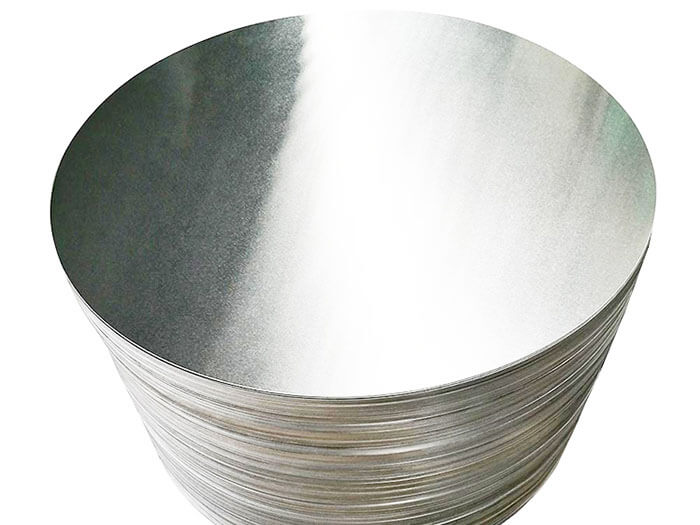
Chapter 3: Key Characteristics and Advantages of 1050 Aluminum Circles
The properties of 1050 aluminum make it a preferred choice for circle manufacturing for numerous applications. An aluminum circle 1050 factory leverages these inherent benefits:
-
Exceptional Formability: The high purity and low alloying content give 1050 aluminum excellent ductility. This makes it ideal for deep drawing (e.g., pots and pans) and spinning (e.g., lamp reflectors), allowing for complex shapes without cracking.
-
Excellent Corrosion Resistance: 1050 aluminum naturally forms a protective oxide layer, giving it good resistance to atmospheric and chemical corrosion. This is beneficial for cookware and outdoor applications like road signs.
-
High Thermal Conductivity: Aluminum, in general, is an excellent conductor of heat. 1050 circles are thus widely used for cookware, ensuring even heat distribution.
-
High Electrical Conductivity: While not its primary application in circle form, its good electrical conductivity is a notable property.
-
High Reflectivity: 1050 aluminum has a bright, reflective surface, especially when polished. This makes it suitable for lighting reflectors and decorative elements.
-
Good Weldability: Alloy 1050 can be readily welded using common techniques, though its low strength means welding is not always the primary joining method for finished parts.
-
Excellent Anodizing Quality: The high purity of 1050 results in a clear, aesthetically pleasing anodic film. It can be easily dyed to various colors, making it suitable for decorative and protective finishes. An aluminum circle 1050 factory producing for anodizing applications pays close attention to surface quality.
-
Lightweight: Like all aluminum alloys, 1050 is lightweight (approximately one-third the density of steel), contributing to easier handling and reduced weight in final products.
-
Recyclability: Aluminum is 100% recyclable without loss of quality, making 1050 aluminum circles an environmentally friendly choice.
-
Cost-Effectiveness: For applications where high strength is not the primary requirement, 1050 aluminum offers a cost-effective solution due to its widespread availability and ease of processing.
Chapter 4: Stringent Quality Control in an Aluminum Circle 1050 Factory
Quality is not an accident; it’s the result of meticulous planning, precise execution, and continuous monitoring. At Huawei Aluminum’s aluminum circle 1050 factory, quality control is integrated into every step of the production process. Key quality parameters include:
-
Chemical Composition Analysis:
Spectrometers are used to verify the alloy composition at the melting stage and on final products, ensuring it meets the 1050 standard. -
Dimensional Tolerances:
-
Diameter: Precision calipers and gauges measure circle diameters to ensure they are within the specified tolerances.
-
Thickness: Micrometers check thickness across multiple points on the circle for uniformity.
-
Flatness/Evenness: Circles must be flat, without warps or buckles, especially for applications requiring a smooth, even surface.
-
-
Mechanical Properties Testing:
Tensile testing machines determine:-
Tensile Strength: The maximum stress the material can withstand.
-
Yield Strength: The stress at which the material begins to deform plastically.
-
Elongation: A measure of ductility, indicating how much the material can stretch before fracturing. This is crucial for deep drawing quality (DDQ) circles.
Hardness testers (e.g., Rockwell, Brinell) also verify the temper.
-
-
Surface Quality Inspection:
Visual and instrumental inspection for:-
Scratches, dents, pits, and roll marks.
-
Oil stains, water stains, and oxidation.
-
Edge quality (smoothness, absence of burrs).
A superior aluminum circle 1050 factory will have strict standards for “no black line, no clean cut, no stain, no roller print.”
-
-
Grain Size Analysis:
For deep drawing applications, a fine, uniform grain size is essential for good formability and a smooth surface finish after forming (preventing “orange peel” effect). Metallographic analysis is performed. -
Adherence to International Standards:
Production and testing often conform to standards like:-
ASTM B209 (Standard Specification for Aluminum and Aluminum-Alloy Sheet and Plate)
-
EN 485/515/573 (European Standards for aluminum products)
-
GB/T 3880 (Chinese National Standard)
-
-
Certifications:
Reputable factories like Huawei Aluminum often hold ISO 9001 certification, demonstrating a commitment to a robust quality management system.
Table 2: Common Tempers for 1050 Aluminum Circles and Their Properties
| Temper | Condition | Tensile Strength (MPa, typical) | Elongation (%, typical) | Primary Use Case |
| 1050-O | Fully Annealed | 60 – 100 | ≥ 35 | Deep drawing (cookware), spinning (reflectors) |
| 1050-H12 | Strain Hardened (1/4 Hard) | 85 – 120 | ≥ 8 | General forming, moderate strength |
| 1050-H14 | Strain Hardened (1/2 Hard) | 95 – 135 | ≥ 5 | Moderate forming, road signs, some cookware lids |
| 1050-H24 | Strain Hardened & Partially Annealed (1/2 Hard) | 95 – 135 | ≥ 6 | Similar to H14, often preferred for better stability |
| 1050-H18 | Strain Hardened (Full Hard) | ≥ 125 | ≥ 3 | Applications requiring higher stiffness, flat parts |
Note: Specific values can vary based on thickness and exact processing parameters.
Chapter 5: Diverse Applications of 1050 Aluminum Circles
The versatility of 1050 aluminum circles, produced by a specialized aluminum circle 1050 factory, makes them indispensable in numerous industries:
-
Cookware Industry:
This is arguably the largest application. 1050-O temper circles are ideal for deep drawing into:-
Pots and pans
-
Pressure cookers
-
Kettles
-
Baking trays and pizza pans
-
Non-stick cookware (as the base material)
-
-
Lighting Industry:
The high reflectivity and formability of 1050 aluminum make it perfect for:-
Lamp reflectors (spun or stamped)
-
Lampshades
-
LED light housings and heat sinks (though alloys with higher thermal conductivity might be chosen for high-power LEDs)
-
-
Road Signs and Traffic Signs:
1050 aluminum circles (often in H14 or H24 temper) offer excellent corrosion resistance and a good surface for reflective sheeting. They are lightweight and durable for outdoor use. -
Electrical Appliances and Electronics:
-
Casings and enclosures
-
Decorative panels
-
Heat spreaders in some electronic devices
-
-
Automotive Components:
While high-strength alloys dominate automotive, 1050 can be used for certain non-structural decorative or heat-shielding components. -
Ventilation and HVAC:
Fan blades, duct components, and grilles can utilize 1050 aluminum circles. -
Packaging:
-
Bottle caps and closures
-
Can ends (though other alloys are more common for can bodies)
-
-
Architectural and Decorative Applications:
-
Ceiling components
-
Decorative discs and panels
-
Anodized and colored elements
-
The ability of an aluminum circle 1050 factory to provide various tempers, thicknesses, and diameters allows for such broad applicability.
Chapter 6: Choosing the Right Aluminum Circle 1050 Factory – Key Considerations
Selecting a reliable supplier is crucial for your business. When evaluating an aluminum circle 1050 factory, consider the following:
-
Experience and Reputation: Look for a factory with a proven track record and positive customer testimonials. Huawei Aluminum has years of experience serving global clients.
-
Production Capacity and Lead Times: Ensure the factory can meet your volume requirements and deliver within your desired timeframe.
-
Technological Advancement: A factory equipped with modern machinery (e.g., advanced casting, rolling mills, precision blanking lines) is more likely to produce consistent, high-quality circles.
-
Quality Management Systems: Certifications like ISO 9001 indicate a commitment to quality. Inquire about their specific QC processes.
-
Range of Specifications: Can they provide the specific alloy, temper, diameter, thickness, and surface finish you need?
-
Customization Capabilities: Some applications require non-standard sizes or specific edge treatments. A flexible aluminum circle 1050 factory can accommodate these.
-
Technical Support and Customer Service: A good supplier offers technical advice, responsive communication, and solutions to potential issues.
-
Raw Material Sourcing: Inquire about their raw material sources to ensure high-purity inputs.
-
Competitive Pricing (Value, Not Just Price): While cost is a factor, the cheapest option isn’t always the best. Consider the overall value, including quality, reliability, and service.
-
Sustainability Practices: An environmentally conscious factory is increasingly important.
Chapter 7: Huawei Aluminum – Your Premier Partner for 1050 Aluminum Circles
Huawei Aluminum embodies all the characteristics of a leading aluminum circle 1050 factory. We pride ourselves on:
-
Unwavering Commitment to Quality: From sourcing the finest raw materials to final inspection, quality is ingrained in our DNA. Our 1050 aluminum circles are known for their superior deep drawing quality (DDQ), excellent surface finish, and precise dimensional accuracy.
-
Advanced Manufacturing Facilities: Our factory houses state-of-the-art equipment, including DC casters, multi-stand hot and cold rolling mills, precision annealing furnaces, and high-speed blanking lines.
-
Expert Team: Our engineers, metallurgists, and production staff possess deep knowledge and experience in aluminum manufacturing.
-
Comprehensive Product Range: We offer 1050 aluminum circles in a wide array of diameters (e.g., 100mm to 1200mm), thicknesses (e.g., 0.3mm to 6.0mm), and tempers (O, H12, H14, H24, H18, etc.) to suit diverse applications.
-
Customization: We work closely with clients to provide tailor-made solutions, including specific alloys beyond 1050 if required.
-
Global Reach: We have extensive experience exporting our aluminum circles worldwide, with robust packaging and reliable logistics partners.
-
Customer-Centric Approach: At Huawei Aluminum, we believe in building long-term partnerships. We offer responsive customer service and technical support to ensure your complete satisfaction.
When you choose Huawei Aluminum as your aluminum circle 1050 factory, you are choosing a partner dedicated to your success.
Conclusion: The Enduring Value of Quality Aluminum Circles
The 1050 aluminum circle, though a seemingly simple component, is a testament to advanced material science and precision manufacturing. Its unique combination of formability, corrosion resistance, conductivity, and aesthetic potential makes it a cornerstone material for numerous industries.
A specialized aluminum circle 1050 factory like Huawei Aluminum plays a critical role in transforming raw aluminum into these high-performance discs. By investing in technology, adhering to stringent quality standards, and focusing on customer needs, we ensure that every aluminum circle we produce contributes to the quality and reliability of your final products. Whether you are in the cookware, lighting, signage, or any other industry utilizing aluminum circles, partnering with a knowledgeable and capable factory is key to achieving optimal results and maintaining a competitive edge.
Frequently Asked Questions (FAQ) about Aluminum Circle 1050 Factory
-
Q1: What is the primary advantage of 1050 aluminum for circles?
A1: The primary advantage is its excellent formability (ductility), especially in the ‘O’ temper, making it ideal for deep drawing and spinning operations common in cookware and lighting manufacturing. Its high purity also ensures good corrosion resistance and anodizing quality. -
Q2: What does DDQ mean for aluminum circles?
A2: DDQ stands for Deep Drawing Quality. DDQ aluminum circles, typically 1050-O, are specifically processed to have optimal ductility, fine grain structure, and surface quality for severe forming operations without cracking or excessive “orange peel” effect. An aluminum circle 1050 factory specializing in DDQ will have tight controls on annealing and material properties. -
Q3: Can 1050 aluminum circles be anodized?
A3: Yes, 1050 aluminum circles are excellent for anodizing. Their high purity results in a clear, uniform anodic film that can be easily dyed for decorative or protective purposes. -
Q4: What is the typical thickness range for 1050 aluminum circles?
A4: A reputable aluminum circle 1050 factory like Huawei Aluminum can typically produce circles with thicknesses ranging from approximately 0.3mm to 6.0mm, though specific capabilities may vary. -
Q5: How does an aluminum circle 1050 factory control the temper?
A5: Temper is controlled through a combination of cold working (reduction during cold rolling) and annealing processes. For ‘O’ temper, the material is fully annealed. For H-tempers (e.g., H14, H24), the amount of strain hardening is carefully controlled, and sometimes a partial anneal is applied. -
Q6: What kind of surface finish can I expect from an aluminum circle 1050 factory?
A6: The standard finish is “mill finish,” which is smooth and relatively bright. Factories aim to minimize scratches, oil stains, and oxidation. Specific surface requirements, such as a brushed finish or preparation for anodizing, can often be discussed. -
Q7: How are aluminum circles packaged for shipment?
A7: They are typically stacked on wooden pallets, often interleaved with paper or thin plastic film to protect surfaces. The stacks are then securely strapped and may be wrapped with plastic film or VCI paper for moisture protection, especially for sea freight. -
Q8: Why choose Huawei Aluminum as my aluminum circle 1050 factory?
A8: Huawei Aluminum offers a combination of high-quality materials, advanced manufacturing processes, strict quality control, a wide range of product specifications, customization capabilities, competitive pricing, and excellent customer service, making us a reliable partner for your aluminum circle needs.
Contact Huawei Aluminum Today
Ready to experience the quality and reliability of a leading aluminum circle 1050 factory? Contact Huawei Aluminum for a consultation or a quote. Let us help you find the perfect aluminum circle solution for your application.