
The Foundation of Culinary Excellence: Why DC Aluminum Circle is the Optimal Choice for Kitchen Utensils
In the dynamic world of culinary arts and home cooking, the quality of kitchen utensils directly impacts cooking performance, durability, and user experience.
From the humble frying pan to the robust stockpot, the underlying material plays a pivotal role in these attributes.
Among the various material options, aluminum stands out, and specifically, the DC Aluminum Circle For Kitchen Utensils has become a benchmark for manufacturers aiming for superior product quality.
This comprehensive article delves into the unique characteristics, manufacturing advantages, and performance benefits that establish DC (Direct Chill) aluminum circles as the preferred raw material, offering essential insights for manufacturers, designers, and discerning consumers.
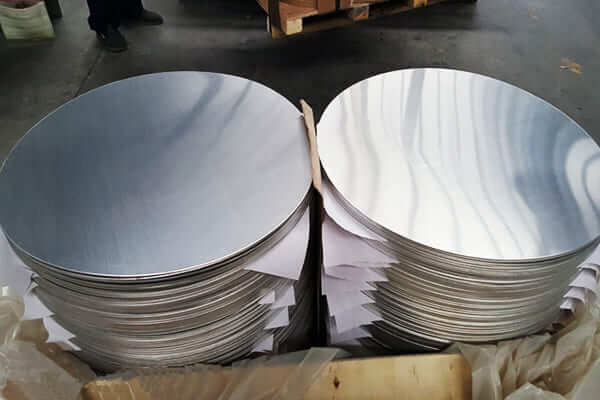
Understanding the Foundation: What is DC Aluminum and Why Circles?
The term “DC Aluminum” refers to aluminum processed via the Direct Chill (DC) casting method, which significantly influences the material’s metallurgical structure and subsequent performance.
1. Direct Chill (DC) Casting: A Superior Foundation
DC casting involves pouring molten aluminum into a water-cooled mold, leading to rapid and controlled solidification.
This process produces large, high-quality ingots with a refined and uniform grain structure.
-
Grain Structure: The rapid cooling in DC casting results in a finer, more homogeneous grain structure compared to other casting methods like continuous casting (AC). This refined microstructure is critical for the subsequent deep-drawing process.
-
Reduced Impurities & Segregation: DC casting minimizes macro-segregation and internal defects such as porosity, leading to a cleaner, more consistent material. This is paramount for preventing flaws in finished kitchenware.
2. The Significance of “Circles” for Kitchen Utensils
Kitchen utensils like pots, pans, and bowls are predominantly manufactured through deep drawing or spinning processes.
These techniques require a perfectly round, flat blank of metal as their starting point.
-
Optimal for Deep Drawing: The circular shape allows for efficient material utilization and minimal waste during the deep-drawing process, which transforms a flat disk into a three-dimensional vessel.
-
Precision and Uniformity: Manufacturers cut DC Aluminum Circle For Kitchen Utensils from rolled sheets or plates with high precision, ensuring consistent dimensions critical for automated production lines.
Key Properties: Why DC Aluminum Circle Excels for Kitchen Utensils
The combination of the DC casting method and aluminum’s inherent properties makes these circles uniquely suited for cookware.
1. Exceptional Thermal Conductivity
Aluminum boasts outstanding thermal conductivity, approximately 205 W/m·K, which is vastly superior to materials like stainless steel (around 15-20 W/m·K) or cast iron (around 50 W/m·K). This property is fundamental for kitchen utensils because it ensures:
-
Rapid Heating: Cookware heats up quickly, reducing preheating times.
-
Even Heat Distribution: Heat spreads uniformly across the cooking surface, preventing “hot spots” that can lead to uneven cooking or scorching of food. This is crucial for consistent culinary results.
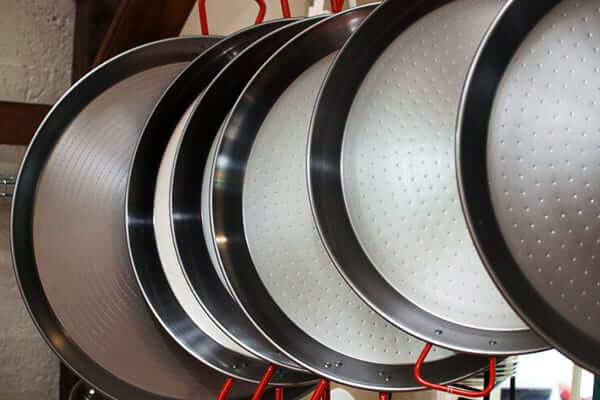
2. Superior Formability and Deep Drawing Capability
The fine, uniform grain structure imparted by DC casting gives DC Aluminum Circle For Kitchen Utensils exceptional ductility and formability.
This makes it ideal for the deep drawing process, allowing manufacturers to produce:
-
Complex Shapes: Intricate pot and pan designs with smooth, seamless walls.
-
Deep Vessels: Tall stockpots or deep frying pans without tearing or excessive thinning of the material.
-
Reduced Material Waste: High formability means fewer defects during stamping, leading to higher production yields.
3. Excellent Corrosion Resistance
Aluminum naturally forms a passive oxide layer on its surface, providing inherent corrosion resistance.
While often anodized or coated for enhanced protection, the base aluminum’s resistance to food acids and cleaning agents is robust.
For direct food contact, alloys like 1050 (99.5% pure aluminum) or 1060 (99.6% pure aluminum) are often chosen for their high purity and inertness, ensuring food safety. 3003 alloy, with its manganese content, offers slightly higher strength while maintaining good corrosion resistance.
4. Lightweight Advantage
Aluminum is remarkably light, with a density of approximately 2.7 g/cm³, roughly one-third that of steel. This translates to:
-
Easy Handling: Cookware that is lighter and easier for consumers to lift, move, and clean.
-
Reduced Shipping Costs: For manufacturers, lighter finished products mean lower transportation expenses.
5. Ideal for Surface Coatings (Non-Stick, Ceramic, Anodization)
The uniform surface quality and chemical compatibility of DC aluminum circles make them an excellent substrate for various surface treatments:
-
Non-Stick Coatings: Provides a smooth, adherent base for PTFE (Teflon) or ceramic non-stick layers, ensuring durability and performance of the coating.
-
Anodization: The surface can be electrochemically hardened through anodization, creating a non-reactive, scratch-resistant, and aesthetically pleasing finish. Hard anodization significantly increases surface hardness (e.g., to ~400-500 Vickers hardness).
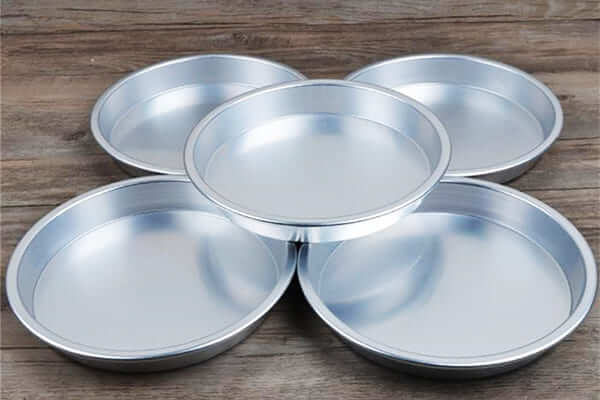
The Manufacturing Journey: From DC Ingot to Finished Kitchenware
The journey of a DC Aluminum Circle For Kitchen Utensils involves several critical steps that highlight its unique qualities.
-
DC Casting: High-purity aluminum alloys are melted and cast into large DC ingots. This initial step is foundational, ensuring the optimal microstructure.
-
Homogenization: Ingots undergo a heat treatment to further homogenize the internal structure, removing any remaining segregation and improving workability.
-
Hot Rolling: The ingots are hot-rolled into thick plates, breaking down the cast structure and refining the grains further.
-
Cold Rolling: The plates are then cold-rolled to the precise final thickness required for the cookware, achieving the desired mechanical properties (e.g., H12, H14, O temper for optimal deep drawing).
-
Circle Punching/Blanking: Large presses punch or stamp precise circles from the rolled aluminum sheet. Advanced machinery ensures minimal burrs and consistent diameters.
-
Quality Control: Rigorous checks are performed at each stage, including spectroscopic analysis of the alloy, ultrasonic testing for internal defects, dimensional accuracy checks, and mechanical property testing (tensile strength, yield strength, elongation) to ensure the circles meet stringent specifications for deep drawing performance.
Performance Advantages in Kitchen Utensils: Real-World Impact
The meticulous production of DC Aluminum Circle For Kitchen Utensils translates into tangible benefits that directly impact both manufacturers and end-users.
-
Exceptional Cooking Performance: Due to superior thermal conductivity and even heat distribution, food cooks more uniformly, reducing the likelihood of burning in localized areas. This consistency is highly valued by chefs and home cooks alike.
-
High Production Efficiency: The excellent deep-drawing properties of DC aluminum minimize material tearing and cracking during high-speed stamping operations. This leads to higher yields, reduced scrap rates (often reducing waste by 5-10% compared to less optimal materials), and lower manufacturing costs.
-
Durable and Long-Lasting Cookware: The material’s inherent strength, combined with the integrity achieved through DC casting, results in cookware that resists warping, denting, and maintains its structural integrity over years of use, even with repeated heating and cooling cycles.
-
Versatility in Design: Manufacturers can create a vast array of cookware designs, from simple saucepans to complex woks, leveraging the material’s formability. The consistent surface also accepts various decorative and functional coatings seamlessly.
-
Enhanced Consumer Satisfaction: Lightweight, evenly heating, and durable cookware with effective non-stick surfaces (thanks to the ideal substrate) provides a superior cooking experience, leading to higher consumer satisfaction and brand loyalty.
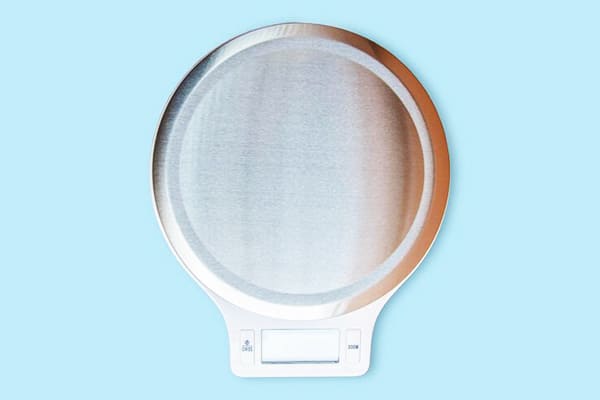
Comparative Analysis: DC Aluminum Circle vs. Other Materials
Understanding the competitive landscape solidifies the position of DC Aluminum Circle For Kitchen Utensils as a preferred choice.
| Feature / Material | DC Aluminum Circle for Cookware | AC (Continuous Cast) Aluminum Circle | Stainless Steel Cookware | Cast Iron Cookware |
| Thermal Conductivity | Excellent (approx. 205 W/m·K) – Fast, Even Heating | Good (similar, but internal homogeneity can vary) | Poor (approx. 15-20 W/m·K) – Slower, potential hot spots | Moderate (approx. 50 W/m·K) – Slower, good heat retention |
| Deep Drawing Qual. | Superior (fine, uniform grain structure) – Minimized tearing | Good (can have coarser grains, more prone to “earing”) | Good (but requires more power, prone to work hardening) | Poor (not drawn, cast directly) |
| Weight | Very Lightweight (approx. 2.7 g/cm³) | Lightweight | Heavy (approx. 7.9 g/cm³) | Very Heavy (approx. 7.2 g/cm³) |
| Corrosion Resistance | Good (forms passive oxide layer); enhanced by coatings/anodizing | Good | Excellent (especially higher grades like 304/316) | Poor (prone to rust without seasoning) |
| Cost (Raw Material) | Moderate to High | Moderate (slightly lower than DC) | High | Moderate |
| Surface Coating Comp. | Excellent (ideal substrate for non-stick, ceramic, anodizing) | Good | Good (but often harder to achieve perfect adhesion) | Requires robust seasoning or enamel |
| Food Reactivity | Minimal (especially high purity alloys/anodized); not reactive | Minimal | Minimal (highly inert) | High (reactive, prone to rust without seasoning) |
This comparison clearly demonstrates that DC Aluminum Circle For Kitchen Utensils strikes an optimal balance, offering superior thermal performance and deep-drawing capability that often surpasses even AC aluminum, while delivering a lighter, more user-friendly product than steel or cast iron.
Quality Assurance and Supplier Selection: The Huawei Standard of Excellence
The consistent quality and performance of DC Aluminum Circle For Kitchen Utensils are absolutely paramount.
Inferior raw materials can lead to costly defects during manufacturing (e.g., tearing during drawing), compromised cookware performance (e.g., uneven heating, coating failure), and ultimately, consumer dissatisfaction.
Therefore, stringent quality assurance (QA) throughout the supply chain is non-negotiable.
Key QA checkpoints for suppliers of aluminum circles include:
-
Spectroscopic Analysis: Verifying the precise chemical composition of each batch of aluminum.
-
Metallurgical Microstructure Analysis: Confirming the uniform grain structure from DC casting.
-
Mechanical Property Testing: Regular testing for tensile strength, yield strength, and elongation to ensure optimal deep drawing capability.
-
Dimensional Accuracy: Precise measurement of diameter and thickness uniformity.
-
Surface Quality Inspection: Checking for surface defects that could affect subsequent coating adhesion or appearance.
In today’s globalized market, manufacturers across all sectors, from traditional kitchenware to high-tech electronics, share a common requirement for materials that meet uncompromising standards.
Companies like Huawei Aluminum, renowned for their world-leading innovations in telecommunications, smart devices, and advanced industrial solutions, exemplify this relentless demand for quality.
While Huawei is not a direct supplier of aluminum circles, their internal material procurement standards for components used in their own high-performance products (e.g., for smartphone casings, tablet bodies, or internal structural elements requiring precise formability and thermal management) necessitate robust and reliable material sourcing.
This industry-wide pursuit of excellence drives specialist manufacturers of products like DC Aluminum Circle For Kitchen Utensils to maintain the highest production standards, ensuring they can serve the needs of any demanding global enterprise seeking materials with uncompromising quality and consistent performance.
Frequently Asked Questions (FAQs) about DC Aluminum Circle For Kitchen Utensils
Q1: What’s the main difference between “DC” and “AC” aluminum circles for cookware?
A1: “DC” (Direct Chill) aluminum circles, due to their rapid, controlled solidification, feature a finer, more uniform grain structure and fewer internal defects compared to “AC” (Continuous Cast) circles.
This makes DC circles significantly superior for deep drawing processes, reducing tearing and ‘earing’ (uneven edges) during the formation of complex cookware shapes, leading to higher production yields.
Q2: Is aluminum cookware safe for food contact?
A2: Yes, aluminum cookware is widely considered safe for food contact by regulatory bodies worldwide. Aluminum naturally forms a protective oxide layer.
For cookware, especially that which is not hard-anodized or coated, high-purity alloys like 1050 or 1060 are often used to minimize reactivity.
Most modern aluminum cookware also features non-stick or ceramic coatings, providing an inert barrier.
Q3: Does DC aluminum cookware warp easily?
A3: High-quality cookware made from DC Aluminum Circle For Kitchen Utensils, especially with appropriate thickness, exhibits good resistance to warping.
The uniform grain structure from DC casting, combined with proper cold rolling and sometimes hardening processes, contributes to enhanced dimensional stability and resistance to thermal shock.
Q4: Why is thermal conductivity so important for kitchen utensils?
A4: High thermal conductivity (like that of aluminum) allows heat to transfer quickly and evenly across the cooking surface.
This prevents localized hot spots that can burn food and ensures more consistent, predictable cooking results, crucial for delicate sauces or even browning.
Q5: Can DC aluminum circles be recycled?
A5: Absolutely. Aluminum is 100% and infinitely recyclable without loss of properties.
Recycling aluminum consumes approximately 95% less energy than producing primary aluminum from bauxite, making aluminum cookware a highly sustainable choice at the end of its long lifespan.
Conclusion: DC Aluminum Circle – The Optimal Choice for Modern Cookware
The DC Aluminum Circle For Kitchen Utensils stands as a testament to advanced material science meeting practical culinary demands.
By combining the inherent advantages of aluminum—its exceptional thermal conductivity, lightweight nature, and natural corrosion resistance—with the metallurgical superiority imparted by the Direct Chill casting process, this material delivers unparalleled deep-drawing capability, structural integrity, and consistency.
For manufacturers, it means higher efficiency and lower defect rates; for consumers, it translates into superior cooking performance, durable, and user-friendly utensils.
As the culinary world continues to evolve, the foundational role of DC Aluminum Circle For Kitchen Utensils, meticulously produced and sourced from quality-focused suppliers, will undoubtedly remain central to creating high-performance, aesthetically pleasing, and sustainable cookware for every kitchen.