
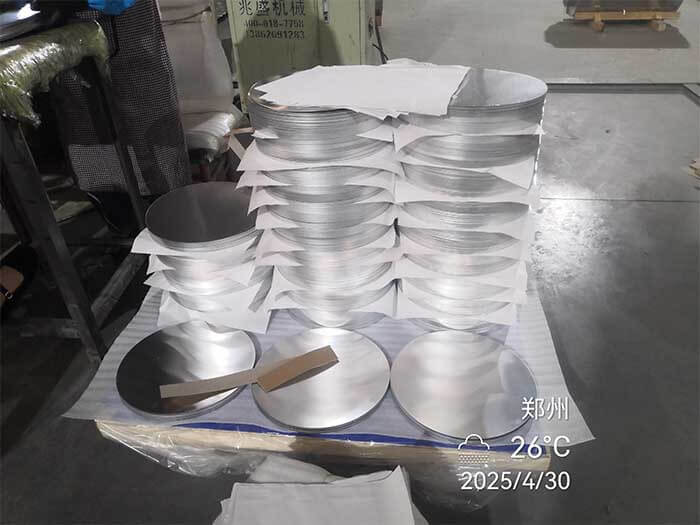
Road signs are ubiquitous, silent guardians of our roadways, guiding, warning, and informing millions of drivers daily. While the messages they convey are critical, the material foundation of these signs often goes unnoticed. At the heart of most durable and effective road signs lies the road sign aluminum circle, a testament to aluminum’s exceptional properties for this demanding application.
Huawei Aluminum, a leading supplier in the aluminum industry, recognizes the critical role these components play and is committed to providing high-quality aluminum circles tailored for traffic sign manufacturing.
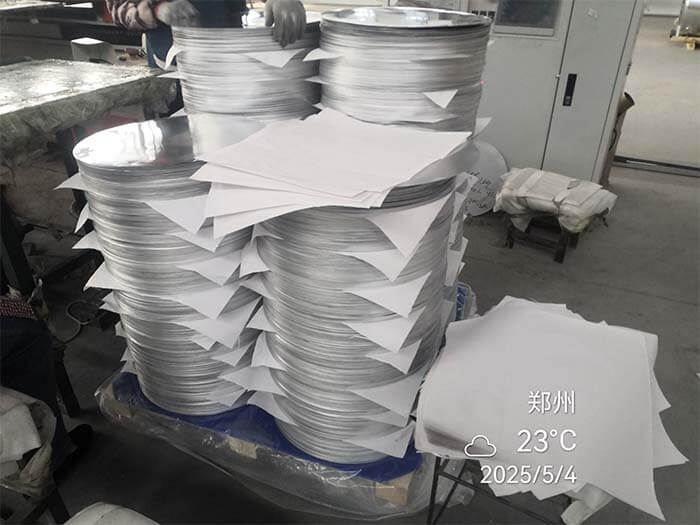
What Exactly is a Road Sign Aluminum Circle?
A road sign aluminum circle (also known as an aluminum disc or blank) is a flat, circular piece of aluminum alloy, precision-cut to specific diameters and thicknesses. It serves as the primary substrate or base material onto which reflective sheeting, lettering, and symbols are applied to create a finished traffic sign. These circles are the backbone of many iconic signs, such as speed limits, stop signs (octagonal, but often starting from circular blanks or optimized rectangular sheets), and warning signs.
Why Aluminum Reigns Supreme for Road Sign Circles
Manufacturers and transportation authorities overwhelmingly choose aluminum for road signs due to a compelling combination of advantages:
-
Exceptional Corrosion Resistance: Aluminum naturally forms a protective oxide layer when exposed to air. This layer makes it highly resistant to rust and corrosion from rain, snow, salt spray, and industrial pollutants, ensuring long service life.
-
Lightweight yet Strong: Aluminum boasts an excellent strength-to-weight ratio. This makes road sign aluminum circles easy to transport, handle, and install, reducing stress on mounting posts and infrastructure.
-
Durability and Longevity: Signs made from aluminum circles can withstand harsh weather conditions, from extreme heat to freezing temperatures, without warping, cracking, or degrading significantly. This longevity translates to lower replacement costs.
-
Excellent Substrate for Adhesion: The surface of an aluminum circle provides a smooth and stable base for the application of reflective sheeting and inks, crucial for nighttime visibility and sign clarity.
-
Formability and Workability: Aluminum can be easily cut, punched, and shaped, allowing for efficient production of various sign sizes and even custom designs.
-
Recyclability: Aluminum is 100% recyclable without loss of quality. Choosing aluminum circles for road signs supports sustainability goals and reduces environmental impact.
-
Cost-Effectiveness: While the initial material cost might be slightly higher than some alternatives, the long lifespan, low maintenance, and recyclability of aluminum make it the most cost-effective solution over time.
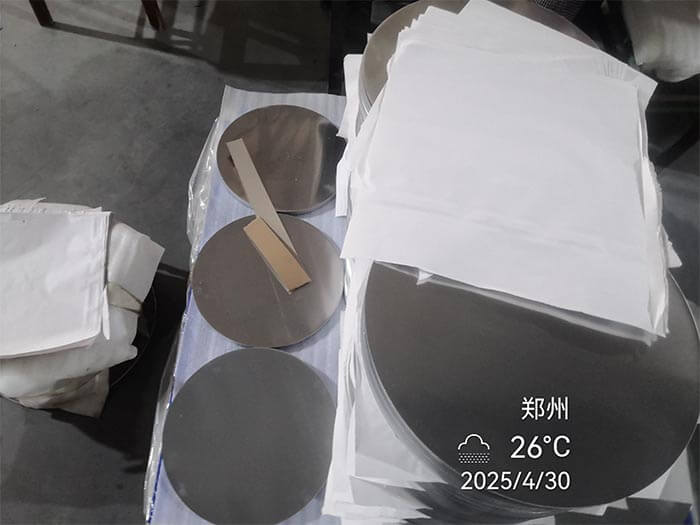
Key Aluminum Alloys for Road Sign Circles
Not all aluminum is created equal. Specific alloys offer the optimal balance of properties for road sign applications. Reputable suppliers like Huawei Aluminum offer a range of suitable alloys:
| Alloy Designation | Key Characteristics | Suitability for Road Signs |
| 1100 Aluminum | High purity, excellent corrosion resistance, good workability, lower strength. | Suitable for signs in less demanding environments or where high formability is key. |
| 3003 Aluminum | Good corrosion resistance, moderate strength (stronger than 1100), good workability. | A very common and versatile choice for general road sign applications. Excellent balance of properties. |
| 5052 Aluminum | Higher strength, excellent corrosion resistance (especially in marine environments), good formability. | Ideal for larger signs, signs in coastal areas, or where higher structural integrity is needed. |
| 6061 Aluminum | High strength, good corrosion resistance, good machinability. | Often used for signposts and structural supports, but can also be used for heavy-duty sign blanks. |
The choice of alloy often depends on the sign’s size, location (e.g., coastal vs. inland), and local regulatory specifications. Huawei Aluminum assists clients in selecting the ideal alloy grade and temper for their specific road sign aluminum circle needs.
The Manufacturing Journey of a Road Sign Aluminum Circle
The creation of a high-quality road sign aluminum circle involves several precise steps:
-
Sourcing High-Quality Ingots: The process begins with prime aluminum ingots of the specified alloy.
-
Hot and Cold Rolling: Ingots are heated and passed through rollers to reduce their thickness and create large aluminum coils. Further cold rolling achieves the precise final thickness and improves surface finish.
-
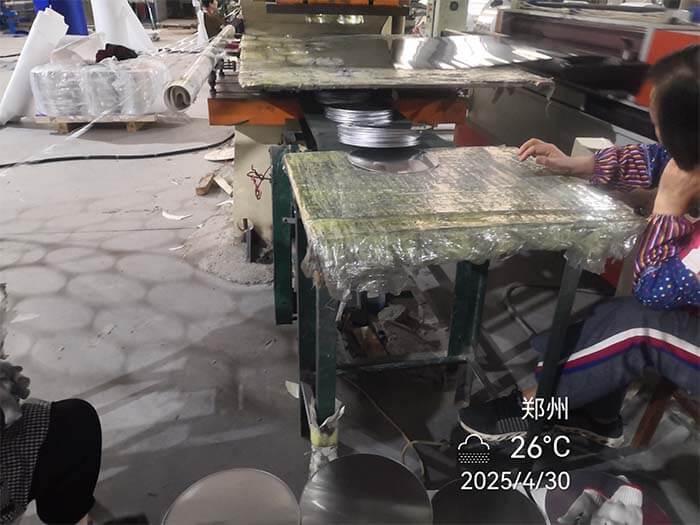
Blanking/Stamping: The aluminum coils are fed into a blanking press, where circular discs of the required diameter are stamped or punched out. This process must be precise to ensure uniform dimensions.
-
Deburring and Cleaning: Edges are deburred to remove any sharpness, and the circles are cleaned to remove oils or contaminants from the manufacturing process.
-
Surface Treatment (Optional but Recommended): To enhance paint adhesion and further boost corrosion resistance, circles may undergo treatments like chemical conversion coating (e.g., chromate or non-chrome) or anodizing.
-
Quality Control: Throughout the process, rigorous quality checks for dimensions, thickness, surface quality, and alloy composition ensure each road sign aluminum circle meets stringent standards.
Huawei Aluminum implements robust quality assurance protocols at every stage, ensuring that every aluminum circle delivered meets or exceeds customer and industry specifications.
Adherence to Standards and Specifications
The production and use of road sign aluminum circles are governed by various national and international standards. For example, in the United States, the Manual on Uniform Traffic Control Devices (MUTCD) outlines requirements for sign design and placement, while ASTM International provides specifications for aluminum alloys and sheet materials.
Common specifications for road sign aluminum circles include:
-
Alloy and Temper: e.g., 3003-H14, 5052-H38
-
Diameter: Ranging from small (e.g., 12 inches / 300mm) to large (e.g., 48 inches / 1200mm or more)
-
Thickness: Typically from 0.063 inches (1.6mm) to 0.125 inches (3.175mm)
-
Surface Finish: Clean, smooth, and free from defects
-
Tolerances: Strict dimensional tolerances for diameter and thickness
Beyond Circles: The Versatility of Aluminum for Signage
While this article focuses on road sign aluminum circles, it’s important to note that aluminum’s versatility extends to other sign shapes. Rectangles, squares, triangles, and custom shapes are also commonly fabricated from aluminum sheet for various traffic control, informational, and regulatory signs. The fundamental benefits of aluminum remain consistent across all forms.
Choosing Your Aluminum Circle Supplier: The Huawei Aluminum Advantage
When sourcing road sign aluminum circles, partnering with a knowledgeable and reliable supplier is paramount. Huawei Aluminum stands out by offering:
-
Premium Quality Alloys: Access to a wide range of certified aluminum alloys suitable for all types of road signs.
-
Precision Manufacturing: State-of-the-art equipment ensuring tight tolerances and consistent quality.
-
Customization: Ability to provide circles in various diameters, thicknesses, and even specific surface treatments.
-
Expertise and Support: A team of professionals ready to advise on the best material solutions for your projects.
-
Commitment to Sustainability: Providing recyclable materials that contribute to greener infrastructure.