
Aluminum cookware has long been a staple in kitchens worldwide, prized for its lightweight nature, excellent heat conductivity, durability and. At the heart of this process is the humble aluminum circle—a flat disc of metal that undergoes a fascinating transformation to become a functional, aesthetically pleasing circle pan. In this blog post, we’ll explore the intricate steps that turn raw aluminum into a high-quality cooking pan, from material selection to final assembly.
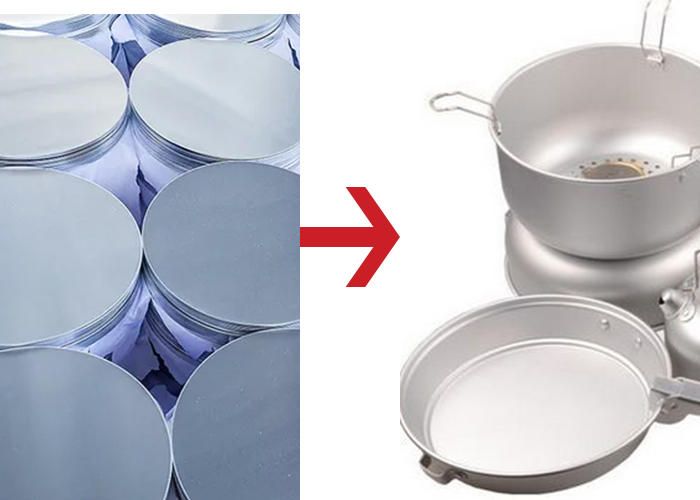
Step 1: Choosing the Right Aluminum Circle
The journey begins with selecting the appropriate aluminum grade. Common choices include:
-
3003 Aluminum: A versatile alloy with good corrosion resistance and formability, ideal for general cooking pans.
-
5005 Aluminum: Known for its enhanced strength durability and, often used in professional-grade cookware.
Key considerations include:
-
Thickness: Typically ranging from 0.5mm to 1.5mm, depending on the pan’s intended use (thicker for heavy-duty applications).
-
Diameter: Matched to the desired pan size (e.g., 8-inch to 12-inch circles).
Quality control at this stage is critical to ensure consistency and reduce defects.
Step 2: Preparing the Aluminum Circle
Before shaping, the aluminum circle is cleaned to remove oils or contaminants. Inspectors check for imperfections like cracks or uneven thickness, which could compromise the final product. The circle is then lubricated to prevent sticking during the forming process.
Step 3: Forming the Pan
The heart of the process involves deep-drawing stamping, where a hydraulic press shapes the circle into a pan. A die and set punch is designed to the pan’s dimensions. The punch presses the aluminum into the die, creating the pan’s depth and curvature. For deeper pans, multiple passes may be required to achieve the desired shape without tearing the metal.
Step 4: Trimming and Finishing
After forming, excess material around the edges is trimmed using industrial shears or lasers. The edges are then deburred to remove sharp edges, ensuring safety and a polished finish. This step is crucial for creating a seamless transition between the pan’s base and sides.
Step 5: Annealing
To relieve internal stresses and soften the metal, the pan undergoes annealing—a heat-treatment process. Typically heated to 300–400°F (150–200°C) for 1–2 hours, annealing enhances durability and prevents warping during future use.
Step 6: Surface Treatment
Depending on the pan’s design:
-
Anodizing: An electrolytic process that thickens the aluminum’s natural oxide layer, improving corrosion resistance and durability.
-
Non-Stick Coatings: Materials like PTFE (Teflon) or ceramic are sprayed onto the pan and cured at high temperatures (800–900°F) for adhesion.
This step not only boosts functionality but also adds aesthetic appeal, such as metallic finishes or vibrant colors.
Step 7: Assembly (Handles)
Handles are attached using riveting or welding. Ergonomic designs and insulating materials (e.g., silicone grips) are prioritized for user comfort. Some pans feature removable handles for versatile use.
Step 8: Quality Control
Rigorous testing ensures each pan meets standards:
-
Leak Testing: Water is poured into the pan to check for imperfections.
-
Warp Testing: Pans are heated and cooled to simulate real-world conditions.
-
Coating Adhesion: Scratches or abrasion tests verify durability.
Defective pans are recycled, minimizing waste.
Step 9: Packaging and Shipping
Pans are wrapped in protective materials to prevent scratches during transit. Packaging often includes care instructions, emphasizing proper cleaning to maintain non-stick surfaces.
Conclusion: The Art of Manufacturing Aluminum Circle Pans
Transforming an aluminum circle into a functional pan is a blend of precision engineering and craftsmanship. From selecting the right alloy to applying high-tech coatings, every step ensures the final product is both durable and user-friendly. Whether you’re a home cook or a professional chef, understanding this process deepens appreciation for the humble aluminum pan—a symbol of innovation in everyday kitchenware.
By prioritizing quality at each stage, manufacturers continue to deliver pans that balance performance, aesthetics, and sustainability, making aluminum cookware a timeless choice for modern kitchens.