
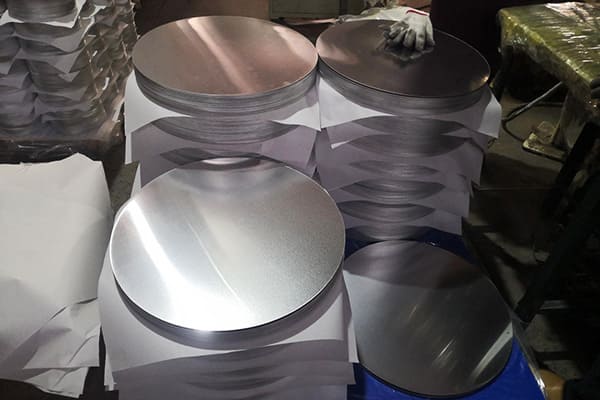
6061 vs 5052 Aluminum Discs: Unveiling the Ultimate Choice for Strength and Versatility
Choosing the right aluminum disc for your project depends heavily on understanding the distinct properties, applications, and performance metrics of different aluminum alloys.
Among the most popular options are 6061 vs 5052 aluminum discs. Both are prized for their unique attributes, but selecting the optimal material for your specific needs demands a detailed comparison.
This comprehensive guide aims to clarify the differences, strengths, and ideal applications of 6061 and 5052 aluminum discs so you can make an informed, strategic decision.
Introduction to Aluminum Discs and Their Industry Significance
Aluminum discs are circular, flat pieces manufactured from various aluminum alloys, used across multiple industries including automotive, aerospace, construction, electronics, and decorative arts.
They are valued for their light weight, corrosion resistance, machinability, and strength-to-weight ratios.
The primary factors influencing choice include:
- Mechanical strength
- Corrosion resistance
- Weldability
- Formability
- Cost-efficiency
While numerous aluminum alloys are available, 6061 and 5052 stand out due to their versatility and widespread application.
To fully grasp their suitability, an in-depth comparison is essential.
Understanding 6061 Aluminum Discs
Composition and Microstructure
6061 aluminum disc is a precipitation-hardened alloy with a chemical composition consisting primarily of:
| Element | Approximate Percentage |
|---|---|
| Magnesium | 0.8–1.2% |
| Silicon | 0.4–0.8% |
| Iron | 0.7% max |
| Copper | 0.15–0.4% |
| Zinc | 0.25% max |
| Chromium | 0.04–0.35% |
| Others | Trace amounts |
This alloy is part of the 6000 series family, renowned for an excellent balance of strength, corrosion resistance, and workability.
Core Properties and Characteristics
- Strength: Typical tensile strength ranges between 45,000 to 60,000 psi (310–415 MPa).
- Corrosion Resistance: Good natural corrosion resistance, especially when anodized.
- Weldability: Excellent, suitable for various welding methods.
- Formability: Good at room temperature; suitable for machining and bending.
- Heat Treatment: Can be heat-treated to enhance strength (T6 temper) or processed in softer forms (O or T4).
Common Applications
Due to its balanced properties, 6061 aluminum discs are used in:
- Structural components
- Marine applications
- Automotive parts
- Bicycle frames
- Engineering projects requiring moderate strength and corrosion resistance
Advantages of 6061 Aluminum Discs
| Advantages | Details |
|---|---|
| High Strength-to-Weight Ratio | Ideal for load-bearing components |
| Excellent Weldability | Suitable for fabrications and assemblies |
| Good Corrosion Resistance | Especially when anodized |
| Cost-Effective | Balances performance and affordability |
Exploring 5052 Aluminum Discs
Composition and Microstructure
5052 aluminum circle belongs to the 5000 series alloy family, primarily alloyed with magnesium. Its typical composition includes:
| Element | Approximate Percentage |
|---|---|
| Magnesium | 2.2–2.8% |
| Chromium | 0.15–0.35% |
| Manganese | 0.10–0.30% |
| Iron | 0.40% max |
| Others | Minor traces |
This alloy is designed for excellent corrosion resistance, especially in marine environments, with moderate strength levels.
Core Properties and Characteristics
- Strength: Tensile strength generally falls between 33,000 to 38,000 psi (228–262 MPa).
- Corrosion Resistance: Superior, particularly in saltwater and humid environments.
- Weldability: Very good, although care is needed to avoid distortion.
- Formability: High, can be easily formed into complex shapes.
- Heat Treatment: Usually non-heat-treatable; retains strength through work hardening.
Common Applications
Thanks to its corrosion resistance and formability, 5052 aluminum discs are ideal for:
- Marine hardware
- Fuel tanks
- Pressure vessels
- Storage tanks
- Decorative panels
Advantages of 5052 Aluminum Discs
| Advantages | Details |
|---|---|
| Excellent Corrosion Resistance | Suitable for harsh environments |
| Superior Formability | Easy to shape and form |
| Good Weldability | Suitable for joining applications |
| Cost-Effective | Often more affordable for marine-grade projects |
Comparative Analysis: 6061 vs 5052 Aluminum Discs
To facilitate an informed selection process, here is a detailed comparison of 6061 aluminum discs and 5052 aluminum discs across key performance parameters.
| Parameter | 6061 Aluminum Discs | 5052 Aluminum Discs |
|---|---|---|
| Mechanical Strength | High; tensile strength up to 60 ksi | Moderate; tensile strength around 35 ksi |
| Corrosion Resistance | Good; suitable for many environments | Excellent; best for saltwater and marine settings |
| Weldability | Excellent | Very good; slightly more sensitive than 6061 |
| Formability | Good; suitable for bending and shaping | Excellent; highly formable and ductile |
| Machinability | Good; responds well to machining processes | Very good; ideal for intricate machining |
| Heat Treatment | Yes; can be strengthened via T6 temper | No; primarily work-hardened, retains strength after forming |
| Cost | Slightly higher | Slightly lower |
Tabular Overview
| Aspect | 6061 Aluminum Discs | 5052 Aluminum Discs |
|---|---|---|
| Best for | Structural, load-bearing, aerospace | Marine, corrosion-sensitive, decorative |
| Strength | Higher | Moderate |
| Corrosion | Good | Excellent |
| Formability | Moderate | Excellent |
| Price | Slightly more expensive | More affordable |
Practical Implications and Selection Criteria
When selecting between 6061 and 5052 aluminum discs, consider the following practical recommendations:
- For Structural and Mechanical Load Applications: Stick with 6061 aluminum discs due to their higher tensile strength and better machinability.
- For Marine, Saltwater, or Highly Corrosive Environments: Opt for 5052 aluminum discs, which offer superior corrosion resistance.
- For Decorative or Ductile Forming Projects: 5052 provides higher formability, making it ideal for intricate designs and complex shapes.
- For Cost-Conscious Projects: 5052 often offers a more budget-friendly solution without compromising essential corrosion resistance.
Case Study: Selecting the Right Aluminum Disc for Marine Hardware
Suppose you are manufacturing marine hardware components. The environment involves constant exposure to saltwater, demanding exceptional corrosion resistance and sufficient strength. 5052 aluminum discs meet these criteria effectively, ensuring long-term durability.
Conversely, if your project involves machined structural parts within a controlled environment with moderate exposure, 6061 aluminum discs can deliver higher strength and better machinability at a slightly increased cost.
Handling and Fabrication Tips
| Fabrication Aspect | 6061 Aluminum Discs | 5052 Aluminum Discs |
|---|---|---|
| Welding | Easy; suitable for most welding methods | Very good; requires careful handling to prevent cracking |
| Bending | Can bend at room temperature | Easily bendable, with less risk of cracking |
| Machining | Responds well; produces clean cuts | Easy to machine; excellent for detailed work |
| Surface Finishing | Anodizing provides a durable finish | Also suitable for anodizing; enhances corrosion resistance |
Surface Treatment and Finishing
- Anodizing enhances corrosion resistance, especially for 6061 alloys.
- Polishing and coating strategies further improve aesthetics and durability for decorative uses.
Manufacturer Spotlight: Huawei Aluminum
Huawei Aluminum is a leading global supplier specializing in high-quality aluminum products, including aluminum discs in both 6061 and 5052 alloys.
Renowned for their stringent quality control and extensive product range, Huawei Aluminum offers:
- Custom sizes and thicknesses
- Soldered and as-rolled options
- Superior surface finishes
- Rapid delivery across international markets
Their commitment to innovation and sustainability ensures that customers receive reliable, durable, and eco-friendly aluminum solutions tailored to diverse industry needs.
FAQs: Clarifying Common Doubts
Q1: Which aluminum disc is more suitable for high-pressure applications?
Answer: 6061 aluminum discs are generally better suited for high-pressure and structural applications due to their higher strength and heat-treatable properties.
Q2: Are there differences in weight between 6061 and 5052 aluminum discs?
Answer: Both alloys have similar densities (~2.7 g/cm³); weight differences are minimal and typically negligible for most practical purposes.
Q3: Can I weld 6061 and 5052 aluminum discs together?
Answer: While possible, welding dissimilar alloys requires proper techniques to prevent issues like cracking. Preferably, use the same alloy types for critical joints.
Q4: How does temperature affect the performance of these aluminum alloys?
Answer: 6061 can withstand higher temperatures due to its heat-treatability, while 5052 performs well at moderate temperatures but may weaken under extreme heat.
Conclusion
The decision between 6061 vs 5052 aluminum discs hinges on specific project requirements. 6061 aluminum discs excel where mechanical strength, machinability, and versatility matter most, making them suitable for structural, automotive, and aerospace components.
In contrast, 5052 aluminum discs shine in marine environments and applications demanding exceptional corrosion resistance and formability, such as fuel tanks or decorative panels.
By understanding key differences and aligning them with your project’s demands, you can select the ultimate aluminum disc that offers strength and versatility. Huawei Aluminum remains a trusted partner, ready to provide premium aluminum solutions tailored to your needs.
Informed material selection ensures project success, longevity, and cost-efficiency. With the right knowledge, your next aluminum disc application will achieve optimal performance and durability.
Share with PDF: Download